Showing posts with label Education. Show all posts

Monday, March 16, 2026

A Tradition Guided by Thought and Reason


By J. DuBois

ROME-RUTHENIA 16 March 2026 (NRom)

Alongside its ancient Apostolic inheritance, the United Roman-Ruthenian Church is shaped by a leadership deeply engaged with the intellectual challenges of the modern world. A graduate of Harvard University, Georgia Institute of Technology, and the University of Kentucky, with seminary formation at the Pontifical Georgian College, His Apostolic Highness the Most Holy Pope Radislav I of Rome-Ruthenia has served for many years as a professor, teaching in the fields of economics, sustainability, business and finance, mathematics, and physics. He has developed university-level coursework in decision strategy, game theory, mathematics, physics, and behavioral economics. This includes international academic work and engagement within leading scientific and academic circles, in partnership with institutions such as the Georgia Institute of Technology and the Harvard University Extension School. His Holiness continues to teach globally, primarily in the areas of economics, business, and sustainability.

This synthesis of scientific formation and Apostolic tradition reflects a continuity of both faith and reason — a Church that preserves the past while engaging the complexity of the present.

Wednesday, October 15, 2025

Satire Meets the Ivory Tower: “Trying to Sue the U” Exposes Academia’s Dark Underbelly with Wit and Courage

By A. DiNardo 

ROME-RUTHENIA 15 October 2025 (NRom)

Brace yourself for an academic adventure like no other.

Fiction—or not?—the truth
here stings.

Trying to Sue the U, is a satirical epic poem circulating online, now celebrating its one-year anniversary. The epic takes readers on a rollicking journey through the labyrinth of modern higher education. It’s a biting fairy tale for grown-ups—equal parts tragic, comic, and cathartic—that exposes the contradictions, bureaucratic absurdities, and moral compromises within universities today.

At its heart, this is not just literature—it’s a mirror held up to power.


A Brave Lecturer vs. the Ivory Tower

In this grand allegory, readers follow “The Brave Little Lecturer,” a defiant figure who dares to challenge the entrenched hierarchies of academia. When he confronts injustice—wage theft, retaliation, discrimination—he finds himself battling a hydra-headed institution that protects itself at all costs.

The poem’s strength lies in its clear-eyed portrayal of systemic failure wrapped in razor-sharp satire. Each character, from “Sneaky Snake” the campus ruler to “Big Gopher” the cold-hearted HR bureaucrat, embodies a familiar archetype of modern university life. On the surface they may seem exaggerated, but  in fact they are painfully recognizable to anyone who’s spent time in academia’s shadowed halls.

Sneaky Snake, the evil campus administrator
who terrorizes all the faculty

Through rhyme and rhythm, the author transforms what could be a grim exposé into something more powerful: a chorus of protest disguised as play.

A parody that reads like a case file.

Lifting the Lid on Academic Hypocrisy

Universities have long marketed themselves as temples of truth and enlightenment. Yet Trying to Sue the U peels back that glossy veneer to reveal a troubling picture—one of censorship, hypocrisy, and double standards.

"Nokloo," the Not-So-Fearless Campus Leader, ever feckless

From administrators who “bury their heads in the sand” to lawyers who weaponize taxpayer money, the poem skewers the machinery of institutional self-preservation. It’s a “civil rights fairy tale,” yes, but one with real-world implications. 

With Truth and Justice, the Brave
Little Lecture thwarts the greedy lawyers

For many adjuncts, lecturers, and contingent faculty, the Brave Little Lecturer’s plight hits close to home. The satire may be cloaked in whimsy, but its commentary on academic labor conditions is deeply authentic.

They silenced a teacher, but not the story.

The piece asks a burning question: When those who teach justice and ethics fail to practice them, what remains of higher education’s moral authority? Answer: Tyranny. 

A Tradition of Truth Through Humor

In the best tradition of literary satire, from Jonathan Swift to George Orwell, Trying to Sue the U uses humor not to trivialize, but to clarify. Its absurdities illuminate uncomfortable truths about power and privilege within supposedly egalitarian institutions rooted in social justice. 

Chameleon, the diversity officer who pretends to serve and
protect the people, but really protects the university administrators

The poem’s “cast” reads like a fable for the 21st century: “Chameleon,” the diversity officer who protects the powerful; “Big Bark,” the state attorney who defends the machinery of the system; “No-Hope Foryu,” the overworked, hapless, and ineffective federal civil rights officer. Each character highlights how accountability erodes when institutional reputation trumps integrity.

Big Bark, the State Attorney General, whose interest isn't justice,
but protecting the University even when it breaks the law

It’s a clever inversion of the academic epic. Where universities once celebrated intellectual bravery, this poem doesn't just suggest they now punish it, but rather blatantly states it. Yet it does so with a wink and a rhyme, making the medicine go down with a smile.

Art as Accountability

What makes Trying to Sue the U truly significant is its moral courage. In a culture where faculty often fear retaliation for speaking out, this piece breaks the silence through allegory. It invites public engagement in what is too often treated as an internal, untouchable affair.

How the epic satire portrays "Lady Justice,"
a high-priced whore up for sale to the highest bidder

By framing institutional failure as mythic comedy, the author creates distance—enough to laugh, but not enough to look away. The result is a kind of poetic whistleblowing, wielding metaphor instead of lawsuits.

Why It Matters

As academia grapples with crises of integrity, funding, and public trust, Trying to Sue the U feels less like parody and more like prophecy. It reminds us that art can still serve as conscience, that laughter can be resistance, and that even in satire, truth can find its voice.

Behind the humor is a simple demand: fairness, transparency, and the right to speak truth to power without fear.

The satire ends on a happy note, as the Brave Little Lecture refuses to play the
game that has been rigged by the corrupt system, follows his own path, and triumphs over injustice.

And perhaps that’s why the Brave Little Lecturer endures—not as a caricature, but as a symbol of every educator who refuses to give up on the ideal that universities once promised to uphold: that knowledge should serve the public good, not just the powerful few.

In the end, “Trying to Sue the U” may perhaps be fiction (or not?) — but its message is anything but.

Saturday, May 10, 2025

A Humble Worker in the Vineyard of Our Lord – in the Church and in the World

Prince-Bishop Radislav (Rutherford) I of
Rome-Ruthenia addresses the campus at
the University of Minnesota Crookston.

M. Derosiers

ROME-RUTHENIA 10 May 2025 (NRom)

In a modest lecture hall at the University of Minnesota Crookston, students convened for lessons in business and behavioral science. Yet, unbeknownst to many, a man with soft eyes and crisp delivery, their professor held a distinguished role beyond academia: Supreme Pontiff of the United Roman-Ruthenian Church.

H.A.H. Prince-Bishop Radislav I of Rome-Ruthenia, Roman-Ruthenian Pope, also known in academia as Prof. Rutherford Johnson, taught courses in economics, finance, statistics, and sustainability at the University of Minnesota Crookston for almost a decade. Affectionately known by many students and colleagues as "Dr. Rutherford," he was well-respected for his dedication to students and helpful nature. Indeed, he always saw teaching as part of his mission of service to others. And now he continues his educational mission in online classrooms around the world where he can reach countless people who would not otherwise be able to study and improve their lives. It is a life-changing mission that he carries out in addition to the responsibilities of running a world-wide Orthodox and Old Catholic church of ancient origins.

The Roman-Ruthenian Pope, (Dr. Rutherford, as he was affectionately known),
engages with students at the University of Minnesota Crookston
on questions of economics, culture, and ethics. 

At Minnesota, and now online, he often appeared not in his white habit, but in suit and tie — part of his Church’s own tradition — blending academic rigor with moral insight. Students describe his classes as “rigorous,” “introspective,” and “life-changing.” Yet the syllabus is standard, as you might find at any secular institution: economic principles, market structures, behavioral models, risk assessment, sustainable business practices. It is only when the professor speaks of the 'why' beneath the 'what' that glimpses of the pontiff begin to surface.

His teaching seamlessly integrated discussions on profit with profound inquiries into justice, human dignity, and the purpose of work, prompting students to reflect deeply on the ethical dimensions of economics. It’s never preachy, and indeed students have commented on his remarkable tolerance for others to express their beliefs in class without fear. Yet, his lectures make students think about what they're actually building with their lives.
 The Roman-Ruthenian Pope at University of Minnesota Crookston
commencement, with Douglas A. Huebsch (University Board of Regents),
Dr. Mary Holz-Clause (Chancellor), and Dr. John Hoffman
(Vice Chancellor of UMC, later President of Bemidji State University).

And how did this happen? Always serving with the humility of his office, he applied like any other scholar. He holds a PhD in Applied (Agricultural) Economics (with a behavioral science focus) from the University of Kentucky, an M.S. in Economics and a B.S. with Honors in Applied Physics from Georgia Institute of Technology, and an A.L.M. in Sustainability from Harvard University Extension School. He even had graduate medical studies that formed part of the foundation for his later behavioral science track in economics. And through his time in academia, he was made a Fellow of the famed Royal Geographical Society in London, a Fellow of the University of Minnesota's Institute on the Environment, and received the ACBSP's Teaching Excellence Award. All, however, not for his own glory, but that of God.
Prince-Bishop Radislav in the habit of his
office of service to others, continuing a mission
of spiritual leadership rooted in Apostolic tradition.
.

For the Prince-Bishop himself, the move to teach as a clergyman was driven by necessity and conviction. “It is the duty of the shepherd,” he said, “to be among the sheep — not only in their moments of prayer, but in their studies, struggles, and questions about the world.”

While some may view the combination of ecclesiastical leadership and academic instruction as unconventional in modern secular universities, others see it as a revival of the historical tradition where clergy were integral to scholarly pursuits. One could even say it is a return to apostolic simplicity. Of course, clergy in the halls of academia is not strange, for the Church established the university system as we know it, and clerics on campus once was a common sight. Even Harvard started as a training ground for protestant clergy.
Prince-Bishop Radislav with Hon. Tom Vilsack, Secretary of Agriculture
of the United States at a special event on campus at the
University of Minnesota Crookston highlighting the pontiff's
continued service in global policy, education, and sustainability
.

And in the United Roman-Ruthenian Church, they follow the ancient model of the apostles. Rather than necessarily living in a specified location, bishops go where they are called by mission. This applies to the Prince-Bishop as well. And, the presence of the Roman-Ruthenian Pope in academia evokes the image of St. Paul engaging with scholars in Athens, bridging faith and reason to illuminate eternal truths in contemporary settings.

Though he never hides his office, he rarely mentions it during class. Yet, students are aware. Some have followed him outside of class into deeper reflection; others are simply impressed by his intellectual clarity and moral steadiness. As the pontiff himself says, “Even in red shoes, the Gospel compels us to kneel beside the brokenhearted.” For his students, he remains a mentor. For the faithful he shepherds around the world, a pontiff. And for all, a living reminder that faith and reason are never truly separate.

Further Reading: 

Saturday, April 13, 2024

A Caring, Regal Touch in the Classroom - Grand Duchess Wanda Receives Teacher of the Year Award

By A. DiNardo

ROME-RUTHENIA 14 April 2024 (NRom)

Recently H.I.R.H. Grand Duchess Wanda of Rome-Frankfurt has been honored with a prestigious Teacher of the Year award, a testament to her unparalleled dedication and influence in education. Teaching English at a high school in the USA, she has not only imparted linguistic knowledge but also life-changing lessons to her students. Her selection for this award from a competitive pool of educators across 30 high schools underscores the profound impact she has made in her students' lives and in the educational community at large.

A Teacher Like No Other

A senior member of the Pontifical Court in the United Roman-Ruthenian Church, Grand Duchess Wanda's approach to teaching in high school goes beyond traditional methods. Her students, who have been vocal in their admiration and respect for her, highlight not just her dedication to teaching English but also to instilling valuable life lessons. "I believe that you have changed people's perspective on life," one student remarked, encapsulating the transformative experience of being under her tutelage. Her commitment to education is evident in the hours she dedicates to grading with quality, ensuring each student receives the feedback they need to excel.

What makes her shine even more is her consistent, positive demeanor. "Her mood is always amazing," commented another student, hinting at the encouraging and uplifting atmosphere she creates in her classroom. This positive environment fosters learning and personal growth, making every lesson not just educational but also a journey of self-discovery for her students.


More Than Just a Teacher

The Grand Duchess's dedication to her students' well-being and academic success is unmistakable. "It is evident that you care about each and every student as well as their ability to grow," said a student, shedding light on her personalized approach to teaching. This individual attention ensures that no student feels left behind, making her classroom a space where every student believes in their potential to grow and succeed.

Her teaching style, characterized by dedication, empathy, and a commitment to excellence, has not only helped her students excel academically but has also taught them valuable life lessons. The Grand Duchess has effectively used her platform and role as an educator to inspire her students, teaching them the importance of hard work, perseverance, and compassion.

The Grand Duchess's holds a unique position in that her role goes beyond that of a typical educator. Her dedication to education is an integral part of her sense of humanitarian service. And, her position within the church allows her to blend her passion for education with her commitment to serving others. 

For Grand Duchess Wanda, education is not just about imparting knowledge; it is about empowering young minds to become compassionate and informed individuals. Her commitment to education and humanitarian service sets an inspiring example for others. She believes that she can make a meaningful difference in the lives of her students and the wider community, and her recent teaching award shows her efforts are recognized and appreciated by both her students and her fellow educators. 

Leaving a Lasting Legacy

The Teacher of the Year award is a fitting recognition for Her Highness's contributions to education. However, her legacy extends beyond this accolade. Through her innovative teaching methods, some feel she has raised the bar for the way English is taught, making it more engaging, relevant, and impactful for her students. Her ability to connect with her students on a personal level, coupled with her dedication to their growth, has left an indelible mark on their lives.

In a time in which education can sometimes feel disconnected from the realities of life, the Grand Duchess has bridged that gap. She has shown that it is possible to teach not just academic content but also lessons that prepare students for the challenges and opportunities of life. Her achievement as Teacher of the Year is a beacon of excellence in the teaching profession, and her story is a powerful reminder of the impact a dedicated teacher can have on their students' lives. Most importantly, her commitment to education and her students' success stands as a testament to her character and dedication. 

The Grand Duchess is not just a teacher but a mentor, a guide, and an inspiration to her students, colleagues, and the broader educational community. In the end, it is clear that the historical legacy she maintains only enhances her role in the classroom, bringing a unique perspective and a deep-seated passion for education that has rightfully earned her the admiration of her students and the recognition of her peers as Teacher of the Year.

Wednesday, March 22, 2023

The Need to Incorporate Comprehensive Protection of Coasts and Oceans

FIRENZE-NUOVA ROMA 22 March 2023 (NRom)

This research article by Papa-Knyaz Rutherford I addresses the ongoing issues of oceanic and coastal protection due to scarce oceanic resources and their benefits for humanity. In addition to being shepherd of the Orthodox Old Catholic Apostolic See of Sts. Stephen and Mark, the Papa-Knyaz holds a Master of Liberal Arts degree in sustainability from the Harvard University Extension School. 

Perhaps since the dawn of civilisation, the oceans have provided life-giving sustenance and transportation to humanity. With over 40% of the world’s population living within 60 miles of a coast, the oceans and coastlines are intimately connected with people’s lives (“Factsheet: People and Oceans,” 2017). Furthermore, with approximately 90% of goods being moved around the world via the oceans, it is scarcely possible to imagine anyone not depending on the oceans (“IMO Profile,” 2020). However, it gets even more fundamental than food and transportation. Humanity depends on the oceans for over half of the world’s oxygen supply, and oceans absorb approximately 50 times more CO2 than the atmosphere (“Ocean-Atmosphere,” n.d.). Also, the oceans regulate earth’s temperature (“The Ocean-Atmosphere System,” 2017). Without properly functioning, well-balanced oceans, humanity will be in dire straits.

Unfortunately, the situation facing the world’s oceans with respect to both its benefits for humanity and marine life has been steadily deteriorating (Harrabin, 2013). Competition for the ocean’s scarce resources have been compounded by the world’s population more than doubling since the Second World War (“Attitudes About Aging,” 2014). That has made those scarce resources even more scarce and more in danger of long-term, potentially irreparable damage.

Fortunately, just as mankind has contributed to the problems the oceans face, humanity can help to turn the tide and restore balance to the ocean and the coasts. Some of the contributions to problems are unwitting, while others are the result of intentional harmful behavior, such as toxic dumping and overfishing. Helping people to see the scope of the problem and how their actions have contributed to problems, as well as how positive action could contribute to solutions has the potential to reverse much of the unintentional sources of damage. Other mechanisms, from regulation to action by NGOs and industry leaders, can also help reduce and, hopefully, eliminate the intentional sources of damage to the oceans and coasts.


Five major areas of concern regarding the sustainable future of coasts and oceans are interference with marine life by ships, degradation of coral reefs, depletion of fish stocks in certain areas due to overfishing, coastal erosion, and ocean discharge. This study will consider each of those problems and ways in which comprehensive protection programmes utilising legislation, industry, and private organisations can help to improve the situation for long-term sustainable success. Without such joint, cooperative efforts that not only seek to attack the problems directly, but are also aimed at widespread awareness within the general public, the current situation faced by the oceans and coasts will continue to deteriorate. The longer it the problem is left on its own, the more difficult it will be to reverse.

Ships and Impact on Marine Life

Shipping is important to transportation of both goods and people. Yet, commercial shipping, which is growing consistently in scope, poses a negative externality on marine life, especially in the form of noise pollution. Just as noisy construction sites and the like both provide benefits and cause noise pollution that irritates and can harm human beings, commercial shipping also causes noise that irritates and can do biological damage to marine life.

In the “Golden Age of Sail,” not only were there fewer ships, but they were also much more quiet. Even as the New World opened up and shipping boomed, the major shipping channels were far less busy than those of today. The primary source of noise for a sailing vessel is the movement of the hull through the water, which is, by comparison to underwater propulsion machinery, rather quiet (Bernardini, Fredianelli, Fidecaro, Gagliardi, Nastasi, and Licitra, 2019).
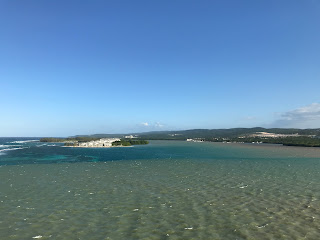

As steam and eventually diesel propulsion entered into marine engineering, the level of noise pollution increased (Erbe, Marley, Schoeman, Smith, Trigg, and Embling, 2019). As the population has expanded and the global economy spread and boomed, so too has commercial shipping expanded to keep pace with growing demand (“Global Freight,” 2019). Underwater noise pollution from shipping can cause organ and other physical damage to marine life, as well as alter animal behavior (Erbe, 2012). Some animals, especially whales and dolphins, are prone to being stranded due either to injuries or fear-based responses to noise (“Underwater noise: Causes,” n.d.; “Underwater noise: Consequences,” n.d.). Furthermore, noise may disrupt feeding and mating and cause marine animals to abandon habitats (“Underwater noise: Causes,” n.d.; “Underwater noise: Consequences,” n.d.).

Although some regulation does exist, there is actually very little effective regulation. In recent times, efforts to establish international cooperation to solve the problem of anthropogenic noise in the oceans have increased dramatically (“Resolution Adopted,” 2018; “Report from the Committee,” 2018). However, it seems very little progress in that regard has been made. Thus far the majority of progress has come from technical innovations in the maritime industry itself. Such efforts should continue and may indeed be the driving force behind ongoing positive change in the industry. Such efforts can be bolstered by effective regulations. However, legislation and regulations are complicated by the transnational, cross-border nature of the maritime industry and the international nature of the majority of oceans. Current efforts at multinational treaties to establish jointly-enforced regulations that prevent “bad behaviour” in the shipping industry should be continued with energy and a sense of purpose, backed by ongoing scientific research rather than being reactionary. That approach can help those trying to do the right thing from being thwarted by those who are determined to continue problems.

First Success Story

The cruise industry, often challenged for its environmental record, has taken steps to reduce carbon, sulfur, nitrogen, and particulate matter emissions, as well as reduce the impact of marine propulsion on marine life (“Turning Tides,” 2019). In response to bad press and growing government pressure around the world, many cruise ships are now outfitted with a propulsor known as an azipod, which is entirely electric and more efficient (“Azipod Electric Propulsion,” n.d.). Also, it is quieter, with fewer disturbances to marine life (“Potential Treatments,” 2012).

III. Degradation of Coral Reefs

At the present, coral reefs are suffering around the world. This is a significant problem especially because they support approximately 25% of all marine life in one way or another and provide valuable “coastal defence” by serving as buffers against wave action and protecting coastal wetland areas (“Importance of Coral Reefs,” 2020; “Coral Reefs Support,” n.d.).

Despite the importance of coral reefs to humans, human agency is nevertheless playing an active role in the global destruction of the reefs. Even something as simple as sunscreen, overall a valuable product to protect people from the sun, is believed to contribute to the destruction of coral reefs when it enters nearby sea water since some of the chemicals commonly found in traditional sunscreens can cause viral infections that result in coral bleaching (Danovaro, Bongiorni, Corinaldesi, Giovannelli, Damiani,…, and Pusceddu, 2008). Bleaching occurs ultimately as a response of the coral to environmental stress. When stressed, the coral loses a photosynthetic algae known as zooxanthellae, which are essential to survival and are responsible for the colour arrays of healthy coral (Bhagooli and Hidaka, 2004). Sunscreens need not even enter the water where the coral reefs are located, but merely need to be introduced into any water body that drains untreated into the oceans (Zachos and Rosen, 2019). Some areas, such as Australia and Mexico, have banned all sunscreen except “reef safe” sunscreen, which uses chemicals such as zinc oxide (McMahon, 2019).

It is not all due to humans, however. Changing ocean temperatures (though humans have a role in some of that) cause stress, which can lead to bleaching (Hoegh-Guldberg and Fine, 2004). Conflict with seaweed also is contributing to the bleaching problem (Zielinski, 2011).

Humans do also contribute to the problems facing coral by introducing pollution into the marine environment, as well as by certain questionable fishing practices, such as using explosives, which damages the coral (Actman, 2016). Even fishing practices that might seem common and harmless may be harmful to coral. One example is bottom trawling, in which nets with rollers dragged along the seafloor, even over coral, creating damage (Stiles, Stockbridge, Lande, and Hirshfield, 2010).

Many of the problems facing coral can effectively be solved with more stringent regulation. Regulation already exists that prohibits toxic dumping in oceans (Tornero and Hanke, 2016). More such legislation is needed on a global basis, given the interconnected nature of the oceans. Additionally, fishing practices can and are regulated. In the US, bottom trawling has been severely restricted (Fimrite, 2019). Of course, the problem is vast, and enforcement of both toxic dumping in the oceans and fishing naturally becomes logistically difficult. One way to help solve the enforcement problem is to commission parties within the fishing and maritime industry to help self-police, following a successful practice in Cuba that has helped preserve the reefs.

Second Success Story

The Parque Nacional Jardines de la Reina in Cuba has realised a great success in protecting their coral reefs. In fact, while coral reefs in the Caribbean overall have been suffering immensely, effective efforts by Cuba have created an environment that has resulted in reefs that are better protected and preserved than most in the Caribbean (Lippsett, 2017; Rader, 2012). One reason for this success is a high degree of tourism regulation, with tourism also generating revenue used for ecological management (Burke, 2014; Stearns, 2020; Puritz, 2017). The park also has a team of experts that the guide ecosystem management policies, as well as partnerships with NGOs and scientific organisations around the world (Whittle, 2011; Burke, 2014).

In order to deal with the problem faced by the park, i.e., enforcement, management derived a clever solution. They outsourced some of their enforcement to a private company that is also the diving service provider for tourists, with enforcement duties being a condition of the company’s monopoly rights (Burke, 2014).

Depletion of Fish Stocks

The rising amount of depletion of fish stocks around the world is an ecological problem, as well as an economic and humanitarian problem. Approximately 90% of fisheries are nearly depleted (Kituyi and Thomson, 2018). Given that fish is a major element of worldwide food supply, the depletion of the fish stocks has the potential to contribute to a major increase in global hunger and starvation.

One major cause of fish stock depletion is government subsidies for the fishing industry, most of which benefit large fleets rather than the small fishing operations, which employ approximately 90% of all fishermen (Kituyi and Thomson, 2018). This naturally impacts the livelihood of people employed in the commercial fishing sector (Kituyi and Thomson, 2018).

Other contributing factors to overfishing are intentional acts that are part of a tragedy of the commons. One egregious example Cape Cod was known as the Codfather. Although eventually stopped by the government, his fleet employed mafia-like tactics and overfished so much that the biomass may or may not recover (Farzi, 2019).

As these examples demonstrate, strong regulation is needed to help stop overfishing and give the biomass a chance to regenerate so that the ocean ecosystem is not disrupted, unnecessary contributions to global hunger may be avoided, and future generations in the commercial fishing sector may continue their profession. One legislative measure that could be employed is to end the present system of fishing subsidies, which could instead be diverted into sustainable ocean ecosystem management projects (Kituyi and Thomson, 2018). As with many regulations pertaining to the ocean, enforcement again becomes problematic. This is particularly true since some of fish may migrate, and overfishing in the waters of one nation may impact the situation faced by another nation. Additionally, the fact that most of the ocean is international compounds the issue. Therefore, regulatory measures are only as good for this problem as international treaties allow. Additional international cooperation must be sought. However, the potential near-term impact to the bottom line of fishermen must not be neglected in such discussions, since the industry support will make regulatory measures much more effective.

Coastal Erosion

As with the problem facing fisheries, coastal erosion is both an environmental problem and an economic problem. In the United States, for example, coastal erosion causes approximately $500 million each year in property damage (“Coastal Erosion,” 2019). Ecologically, coastal erosion also interferes with wetland environments, threatening the plants and wildlife in those areas (“Coastal Erosion,” 2019). Much of coastal erosion increases are caused by human agency. However, solutions have a potential for side effects, as solving coastal erosion in one location could lead to erosion and another coastal area (Labuz, 2015).

Though there is a definite need for strong regulation to curb coastal erosion due to human interference, care must be taken in the creation and enforcement of such regulations to avoid creating additional problems. Government regulation to help solve coastal erosion should be focused both on reducing the erosion in the first place and on mandating mitigation efforts such as land reclamation programmes.

Ocean Discharge

Discharge of waste into the ocean is an obvious problem. One of the classic examples is the soda can “sixpack” rings in which fish can become trapped (“This Brewery,” 2019). And, of course, toxic materials find their way, accidentally or intentionally, into the oceans (Tornero and Hanke, 2016). The problem is straightforward, yet it is ongoing and becoming worse.

The straightforward nature of the problem of ocean discharge, as well as the increase in its magnitude underscore the significant need for regulation and enforcement. Without regulation and careful enforcement, businesses are effectively free to dump whatever they wish directly into the ocean or into a body of water that flows into the ocean. Yet, it is not only a corporate problem. The trash discarded by private citizens directly into the ocean, into bodies of water that flow into the ocean, or even into storm drains that drain in some way eventually to the ocean is a major contributing factor (“Stormwater Runoff,” 2020). Therefore, regulation on such discharge is clearly something that is important to maintain and expand for the protection of the ocean. Public campaigns for awareness and active participation should accompany regulatory measures.

Conclusions

Interference with marine life by ships, degradation of coral reefs, depletion of fish stocks in certain areas due to overfishing, coastal erosion, and discharge other refuse into the oceans are five major threats to the ecosystem of the ocean, with additional second-order threats to humanity and the economy. Humanity depends upon the oceans for food and transportation, as well as for temperature regulation and oxygen. Not to protect the oceans is ultimately to point a loaded gun at ourselves. Unfortunately, as the population grows, a tragedy of the commons has resulted, coupled with selfish behaviour on the part of companies, individuals, and sometimes even governments. The scarce resources of the ocean are becoming even more scarce.

Due to the nature of the problems facing the oceans today, there is a definite need for continued and expanded strong regulation and protection programmes. There remains a problem of enforcement and implementation, given the multi-national and cross-border nature of the oceans, as well as the large international section of the oceans. Therefore, protection programmes and regulation must be accompanied by diplomatic efforts leading to treaties that indicate a shared goal of oceanic protection. Furthermore, heavy-handed measures against companies and individuals, especially where a real or perceived economic damage may happen, are counterproductive. Thus industry and public cooperation are essential, suggesting the need for a comprehensive industry and public relations effort to accompany any regulatory efforts. The problem impacts everyone, and therefore the solution should, as much as possible, involve everyone. 

REFERENCES

Actman, J. (2016). Watch Fishermen Bomb Their Catch Out of the Water. National Geographic. 

Attitudes About Aging: A Global Perspective. (January 30, 2014). Pew Research Center. https://www.pewresearch.org/global/2014/01/30/chapter-4-population-change-in-the-u-s-and-the-world-from-1950-to-2050/

Azipod Electric Propulsion: The driving force behind safe, efficient and sustainable operations. (n.d.) Retrieved from https://new.abb.com/marine/systems-and-solutions/azipod

Bhagooli, R. and Hidaka, M. (2004). Release of zooxanthellae with intact photosynthetic activity by the coral Galaxea fascicularis in response to high temperature stress. Marine Biology, 145.

Bernardini, M., Fredianelli, L., Fidecaro, F., Gagliardi, P., Nastasi, M., and Licitra, G. (2019). Noise Assessment of Small Vessels for Action Planning in Canal Cities. Environments, 6(31).

Burke, L. (2014). Cuba's Jardines de la Reina Reef—A Beacon of Hope in the Caribbean. World Resources Institute. Retrieved from https://www.wri.org/blog/2014/01/cubas-jardines-de-la-reina-reef-beacon-hope-caribbean

Coastal Erosion. (2019). U.S. Climate Resilience Toolkit. https://toolkit.climate.gov/topics/coastal-flood-risk/coastal-erosion

Coral reefs support 25% of life in the ocean -- but they need our help. (n.d.). National Marine Sanctuaries. https://sanctuaries.noaa.gov/news/dec15/coral-bleaching.html

Danovaro, R., Bongiorni, L., Corinaldesi, C., Giovannelli, D., Damiani, E., Astolfi, P., Greci, L.,  and Pusceddu. (2008). Sunscreens Cause Coral Bleaching by Promoting Viral Infections. Environmental Health Perspective, 116(4). 

Erbe, C. (2012). Effects of Underwater Noise on Marine Mammals. In Popper, A.N. and Hawkins, A., Eds. The Effects of Noise on Aquatic Life. Springer. 

Erbe, C., Marley, S.A., Schoeman, R.P., Smith, J.N., Trigg, L.E., and Embling, C.B. (2019). The Effects of Ship Noise on Marine Mammals — A Review. Frontiers in Marine Science.

Factsheet: People and Oceans. (2017). The Ocean Conference. United Nations. 

Farzi, A.N. (August 20, 2019). The ‘Codfather’ was a seafood kingpin, until fake Russian mobsters took him down. Now he’ll never fish again. Washington Post. 

Fimrite, P. (November 20, 2019). Bottom-trawling fishing severely restricted off West Coast starting in January. San Francisco Chronicle. 

Global Freight Expected to Triple by 2050. (May 27, 2019). The Maritime Executive. 

Harrabin, R. (3 October 2013). Health of oceans 'declining fast'. BBC News. 

Hoegh-Guldberg, O. and Fine, M. (2004). Low temperatures cause coral bleaching. Coral Reefs, 23.

IMO Profile. (2020). International Maritime Organisation. United Nations. https://business.un.org/en/entities/13

Importance of Coral Reefs. (2020). NOAA Ocean Education Service. https://oceanservice.noaa.gov/education/kits/corals/coral07_importance.html

Kituyi, M. and Thomson, P. (2018). 90% of fish stocks are used up – fisheries subsidies must stop emptying the ocean. World Economic Forum. 

Labuz, T.A. (2015). Environmental Impacts—Coastal Erosion and Coastline Changes. Second Assessment of Climate Change for the Baltic Sea Basin.

McMahon, S. (August 20, 2019). 6 Destinations with Sunscreen Bans, and What You Need to Know. Smarter Travel. https://www.smartertravel.com/sunscreen-ban-destinations/

Ocean-Atmosphere CO2 Exchange. (n.d.). Science On a Sphere: National Oceanic and Atmospheric Administration. https://sos.noaa.gov/datasets/ocean-atmosphere-co2-exchange/

Potential Treatments for Reducing Underwater Sound to Protect Marine Life. (7 July 2012). CSL Australia. Retrieved from https://www.epa.govt.nz/assets/FileAPI/proposal/EEZ000004/Evidence/faf4d5eacf/EEZ000004-08D-Ian-Ives-Vessel-Dynamics.PDF

Puritz, A. (2017). Evaluating management effectiveness of marine protected areas in Cuba's southern archipelagos: A comparative analysis between Punta Francés and Jardines de la Reina National Parks. Open Access Theses. Retrieved from http://scholarlyrepository.miami.edu/oa_theses/6

Rader, D. (2012). 60 Minutes and Cuban Reefs. Environmental Defense Fund. Retrieved from http://blogs.edf.org/edfish/2012/01/04/60-minutes-and-cuban-reefs/

Report from the Commission to the European Parliament and the Council assessing Member States' programmes of measures under the Marine Strategy Framework Directive. (2018). European Commission.

Resolution adopted by the General Assembly on 11 December 2018. (2018). General Assembly, United Nations.

Ship Quieting Technologies. (n.d.). Sounds in the Sea. https://dosits.org/animals/effects-of-sound/moderate-or-eliminate-the-effects-of-human-activities/ship-quieting-technologies/

Stearns, W. (February 9, 2020). Cuba’s Gardens of the Queen. Underwater Journal. 

Stiles, M.L., Stockbridge, J., Lande, M., and Hirshfield, M.F. (2010). Impacts of Bottom Trawling on Fisheries, Tourism, and the Marine Environment. Oceana. 

Stormwater Runoff. (2020). US EPA. https://www3.epa.gov/region9/water/npdes/stormwater-feature.html

The Ocean-Atmosphere System. (2017). https://www.tulane.edu/~sanelson/Natural_Disasters/oceanatmos.htm

This brewery is ditching plastic six-pack rings to save marine life. (October 6, 2019). The European Sting. https://europeansting.com/2019/10/06/this-brewery-is-ditching-plastic-six-pack-rings-to-save-marine-life/

Tornero, V. and Hanke, G. (2016). Chemical contaminants entering the marine environment from sea-based sources: A review with a focus on European seas. Marine Pollution Bulletin, 112(1-2).

Turning tides: sustainability and the cruise industry in 2019. (December 4, 2019). National Geographic. https://www.nationalgeographic.co.uk/travel/2019/12/turning-tides-sustainability-and-cruise-industry-2019

Underwater noise: Causes. (n.d.). Ocean Care. Retrieved from https://www.oceancare.org/en/our-work/ocean-conservation/underwater-noise/silent-oceans-causes-underwater-noise/

Underwater noise: Consequences. (n.d.). Ocean Care. Retrieved from https://www.oceancare.org/en/our-work/ocean-conservation/underwater-noise/underwater-noise-consequences/

Whittle, D. (2011). Twenty Years of Coastal Research and Conservation in Cuba. Environmental Defense Fund. Retrieved from http://blogs.edf.org/edfish/2011/12/05/twenty-years-of-coastal-research-and-conservation-in-cuba/

Zachos, E. and Rosen, E. (2019). What sunscreens are best for you—and the planet? National Geographic. https://www.nationalgeographic.com/travel/features/sunscreen-destroying-coral-reefs-alternatives-travel-spd/

Zielinski, S. (May 17, 2011). Ocean Acidification and the Battle Between Coral and Seaweed. Smithsonian Magazine. 

Note: This article first appeared in Telicom, 34(1) in 2022. 

Thursday, April 7, 2022

Papa-Catholicos Receives Prestigious Teaching Award

Source: C-Comm; NC Publications Office

FIRENZE-NUOVA ROMA 07 April 2022 (NRom)

H.H. Papa Rutherford I, Gallo-Russo-Byzantine Catholicos recently received the Accreditation Council for Business Schools and Programs (ACBSP) Teaching Excellence Award for baccalaureate and graduate degree-granting business institutions, Region 4. Built on the significance of the classroom teacher to the mission of degree-granting institutions, the award is an annual award that recognizes individuals each year who exemplify teaching excellence in the classroom. One recipient is chosen from among associate degree institution applicants, and one from among all baccalaureate/graduate degree institution applicants within each of the eleven ACBSP regions around the world. The selection process evaluates nominees based on a series of criteria, teaching philosophy, and recommendation from university administration. In the summer, one recipient will be selected for the international award. ACBSP is the only specialized accrediting body for business schools that presents an award recognizing excellence in teaching that is open to the entire membership. The award recognized the Archfather's innovations in remote/virtual teaching experiences to benefit on-campus students; innovations in learning experience for online students; real-world, guided discovery experiential learning approaches; creative approaches to availability to students; success in ensuring accessibility to students with disabilities; contributions in diversity, both in and out of the classroom; effective incorporation of cultural and international components in the classroom; outside service to the community, nation, and world; and scholarly contributions to the field of pedagogy.

The Archfather teaches economics, finance, and international business at the University of Minnesota's Crookston campus, with a focus on empowering students to take control of their own future and succeed in an ever-challenging world. He is a graduate of the Harvard University Extension School, Georgia Institute of Technology, and the University of Kentucky College of Agriculture.

Sunday, May 3, 2020

Quarantine Reading -- Nation of Christ


The Global Coronavirus Pandemic and the Worldwide
Government Response to the Pandemic have exposed
profound cracks in the foundation of modern society.

In these challenging times, Nation of Christ will challenge you to grow. It confronts many of the widely-held ideas in the world today. In an era of secularism, traditional Christianity is radical indeed. Nation of Christ is an in-depth guide to applying the Word of God and the doctrine of His Holy Church to living a Christian life, even in the fact of secularization and opposition. It builds on Sacred Scripture and the words of Saints, Popes, and theologians to provide pastoral advice that is both timeless and relevant for the modern era. 


Or find out more here:

Thursday, October 10, 2019

The Tradition and Etiquette of Calling Cards

10 October 2019 (ORCNS) - The calling card, or visiting card as it is sometimes known, is almost a lost custom in modern society. Yet, like the oaks that have seen kings and wars and plagues come and go, the calling card refuses to die. The calling card, distinct from the business card, is left when paying social calls. It has quite a few other uses that are part of its centuries-old tradition as well. Even in today’s rushed, sterile society…
and perhaps even more so because of the modern hurried, faceless environment…the calling card remains the mark of a lady or gentleman of class and distinction. To use calling cards is to have self-respect and respect for others. It is a reminder to those you encounter that you are thinking of them, despite your busy life. No lady or gentleman should leave the house without calling cards.

On a business card, one normally sees the name of the company, perhaps a logo, the individual’s name, and a full array of contact information. By comparison, the calling card is quite plain. Most traditionally, cards are white, with the name printed in black ink in block text or a script (rarely if ever should “Old English” or overly fancy fonts be used). There ends the required inclusions. Some sort of small heraldic emblem may optionally be placed in the corner or the top center. An address may be put in the bottom right corner, but this is not obligatory and typically superfluous. Telephone numbers and email addresses ought also to be avoided, but especially today they are often included. Most traditionally, an individual writes the address or telephone or internet information by hand at the time that the card is presented…and only when those pieces of information are needed. In any case, the bottom left should be left blank.

Style of the Name on the Calling Card

A calling card should indicate how you should be introduced by, for example, a butler or valet. So, names should be written out in full. Middle names may be omitted or abbreviated as needed. Other than Mr. and Mrs., titles should be spelled out except where space is a concern. For nobles and royals with styles such as Excellency, and Highness, these are typically omitted, as they are generally “implied” by what is on the card.

Boys who do not have titles of nobility simply have their name inscribed in the center of the card. They may adopt “Mr.” upon reaching the age of majority. Girls who do not have a title of nobility use “Miss” until they marry. The modern female business title of “Ms.” has no place on a social calling card.

Married women of gentlemen have their names inscribed as “Mrs.” followed by the full name of their husband. The possible variations for the wives of knights and nobles are too numerous to discuss in detail here. However, a good rule of thumb is that the wife’s card follows the same general style of the husband’s. This varies by the customs of the country of origin of the title and should generally not vary according to the country of residence or visitation.

Names should also never exceed a single line. Titles and, on occasion, offices such as Mayor or Governor may be written on another line or lines below the name as needed. Ultimately good taste and functionality determine the final layout of the card.

Exceptions exist, of course. For example, U.S. military officers, who are often expected to have calling cards, have a specific set of rules to follow. For junior officers, the name is in the center of the card, with the rank and branch of the service in the bottom right. For senior officers, the rank is placed before the name on the same line, with the branch in the bottom right. General and Flag officers may write “General” or “Admiral” with only their last name in the center of the card if they choose.

Joint Spouse Calling Cards


Married couples may also have calling cards. These may be used, along with the couple’s individual cards, when paying a formal visit. The joint card may also be used for gift enclosures. Joint cards are inscribed as “Mr. and Mrs. John Smith” or in a similar fashion for those with noble titles.

Use of Calling Cards


Calling cards are used, of course, when paying a formal call on someone. In the most formal circumstances, an attendant will take the card of the visitor to the host. It is also used to announce the visitor. When the host is not at home (which may mean simply “not receiving visitors”), a calling card says “I was here.”

When one receives an invitation that did not say r.s.v.p. or have a reply card, and one cannot attend, it is customary and polite to send one’s calling card by post to arrive on the day of the event or shortly before.

Cards may also be used as gift enclosures, to express condolences, or to give congratulations. They can also be used to convey information or to send/leave very brief notes.

In cases where one is leaving a card for a good friend with whom one is on a first name basis, one may cross out the parts of the name on the calling card except for the first name. Or, if there is a nickname, the entire name can be crossed out and the nickname written by hand above it. This is by no means obligatory. Notes may also be written on the front and/or back of the card.

Those Curious Initials in the
Bottom Left Corner


To make communication easier, a system of abbreviations in French developed over the years. These are written by hand in the bottom left corner of the card…which is why that corner should always be left blank in the printing process!

p.r. (pour remercier) 
To indicate thanks. (Should never take the place of a proper letter/note of thanks.)

p.f. (pour feliciter) 
To express congratulations.

p.c. (pour condoler) 
To express sympathy.

p.p.c. (pour prendre congé) 
Used when taking leave for the season or permanently. Though these may be left or sent as an advance notice, they should never be used solely in place of a formal call.

p.p. (pour presenter) 
To present another person. This should be accompanied by the card
of the person being presented.

p.f.N.A.
To wish a Happy New Year.

Sunday, February 3, 2013

Why does my priest wear that?

In today's modern sense of casual dress and casual everything else, sometimes the vesture of the clergy is seen as outdated and inappropriately formal. Yet, from a spiritual and even a worldly standpoint, this does not make sense. The dress of the clergy is not defined by any one time period. Neither is it defined by the ways of the world, for the Holy Church is not of this world. As to its perceived formality, that, too is relative to the point of comparison.

A cleric wears the dress prescribed by Canon Law and other ceremonial directives as a mark of his humility and obedience to the Church, his death to the world, and his complete embracing of his sacred vocation. Indeed, clerics are essentially supposed to be in some form of clerical dress at all times, with exceptions like participating in athletics. So, let's look at what the clergy wears and why they wear it.

The Cassock

This is the fundamental clerical garment. It symbolizes the cleric's death to the world and shedding of worldly vanity as he humbly submits in full obedience to the Church and service to God.

The cassock is actually a long, ankle-length coat, not a robe. It is worn by all clerics and even seminarians. For most, it is black. For Bishops and certain other Prelates, it is purple as a sign of their participating in the fullness of Christ's Holy priesthood as the principal ministers of the Gospel. For Cardinals, the cassock is red as a sign of their willingness to defend the faith even to the point of spilling their own blood. The Holy Father's cassock is white, a custom that began when a Dominican, Pius V, became Pope and retained his white Dominican habit. For those with colored cassocks, there is also a "house cassock" in black with red or purple trim for use in non-liturgical settings.

The cassock is always correct attire for a cleric. For black and white tie functions, the cassock is what Catholic clerics are generally expected to wear, along with a cape called a ferraiolo (see below). Sometimes a formal clergy suit is permitted. Most formally, it is worn with knee britches and stockings. This custom is stil seen today, especially in England. For Anglican Bishops, there is a special variation called apron and gaiters, which has a jacket in black or purple similar to a cassock, but short, and black gaiters are worn over the stockings. This originated as a practical garment for wear on a horse as the Bishop travelled and symbolizes the Bishop's duty to visit his flock.

Fascia (Cincture)

Over the cassock is worn by major clerics and some seminarians the fascia, a wide band of cloth with usually fringed ends that hand down on the left side. It is black for most clerics. Bishops and prelates use a purple one. Cardinals use red, and the Holy Father uses white. Some seminaries have special colors used for the fascia and even the cassock. The fascia symbolizes chastity according to one's state in life.

Ferraiolo

The ferraiolo is a full-length formal cape attached at the neck with a ribbon tied in a bow. It is worn over the cassock by priests, especially for formal occasions, and demonstrates the glory and grandeur not of the individual, but instead of Christ's priesthood. It is black for most clergy, purple for Bishops, and red for Cardinals. The Pope does not use a ferraiolo.

Zucchetto

Proper to all clerics, the zucchetto is a skull cap that represents the clerical tonsure. It may be worn by all who have received First Tonsure and continues the symbolism of the cleric as a slave to Christ and humble servant of the Church. It is usually black for all clerics, though those in religious orders may have zucchetti in colors proper to their order. That for Bishops is purple, for Cardinals red, and for the Pope, white. Some prelates have black zucchetti with purple or red trimming.

Saturno

The saturno is the standard non-liturgical clerical hat. It is primarily a practical item for wear outdoors with the cassock and sometimes with the clergy suit. It is usually black and may, for priests, optionally have black cords and tassels. For Bishops, green and gold cords may be used, and for Cardinals, red and gold. There are also saturnos in green for Bishops and red for Cardinals and the Holy Father. In the summer, a version of this hat in straw is sometimes used. The saturno continues the symbolism of the cleric's death to the world and his humble submission to the Church and his clerical duty.
Biretta

The biretta is used by clerics of at least the order of Sub-Deacons (occasionally by seminarians as well) as both a liturgical and non-liturgical hat. It is worn by clerics during the mass, and even by Bishops and Cardinals while saying a low mass. It is black for clerics through priest, and sometimes has purple or red trimmings for prelates. It is purple for Bishops and red for Cardinals. The Holy Father does not use a biretta, though the Papal hat known as the camauro (red velvet with fur trim) is similar in origin. Also, the academic hats used today share a common origin to the clerical biretta.

Tabarro

The tabarro (Italian for cloak) is a clerical cape primarily for outdoor use in cold weather. For wear over much of clerical attire, a cape is far more practical than a coat. The tabarro in black may be used by all clerics. That of bishops may also be purple, and that of Cardinals and the Pope, red.

Surplice

The surplice is a white garment, sometime made partly of lace, worn over the cassock while assisting at mass and not in alb (see below), at the Divine Offices, and for other sacraments and rites. It is usually approximately knee-length and is essentially a shortened version of the alb. The Anglican style often has very wide sleeves, while the Roman style tends to have narrower sleeves. Also, the Anglican style sometimes is ankle-length.

Rochet

The rochet is a garment similar in style to the surplice, but indicative of ecclesiastical jurisdiction. It is proper to Bishops and some prelates. The Roman style is approximately knee-length and has tight sleeves. The Anglican style is ankle-length and has full-sleeves gathered at the wrists with cuffs and ruffles. The Roman style is properly worn underneath the surplice and alb by Bishops and other prelates entitled to the rochet as a symbol of their jurisdiction.

Mozzetta

The mozzetta is the element of a Bishop's habit that indicates his jurisdiction and authority as a successor of the Apostles. The mozzetta is purple for Bishops and Archbishops, and red for Cardinals. It is worn over the rochet. It is worn by Bishops only in their own jurisdictions. That is, a Bishop Ordinary wears the mozzetta in his own diocese only. A Metropolitan wears it within his entire Province. A Cardinal wears the mozzetta everywhere. An Auxiliary Bishop, as he is never technically within his own diocese, does not use the mozzetta. Additionally, some Canons use the mozzetta in various colors as part of their Chapter dress. The mozzetta of Bishops in religious orders is usually in a color proper to the habit of that order.

Mantelletta

The mantelletta is a symbol of prelatial leadership, but limitation of jurisdiction. The mantelletta is usually purple and worn over the rochet to cover it, thereby symbolizing the limitation of jurisdiction. It is worn by Bishops Ordinary outside their dioceses and by Metropolitans outside their provinces. Bishops Ordinary also wear it underneath the mozzetta when they are in their own diocese, but the Metropolitan or another greater prelate is present. Cardinals wear the mantelletta similarly under the mozzetta when in Rome and the Holy Father is present within the City. As with the mozzetta, some Canons use it as their Chapter dress, and it is in the color of the religious habit for religious bishops. Also, some prelates who are below the rank of Bishop have the mantelletta as their habit, which is why they are sometimes known as "prelates of the mantelletta."

Cappa Magna

The cappa magna is the most formal element of a Bishop's personal habit. It is a full cape that covers the entire body, the front being usually held up by the wearer's arms, and with a long train. The train is a symbol of jurisdiction, and thus is worn down only in one's own jurisdiction (following the same guidelines as where the mozzetta would be worn.) This garment also has a hood, but the hood is only worn over the head on penitential occasions. The cappa magna is purple for Bishops and red for Cardinals. The Pope makes use of a red cappa magna on a few specific occasions only. The cappa magna is what a Bishop wears for a solemn arrival to a church, for example, to celebrate a solemn liturgy. It furthers the representation of the regal nature of Christ's royal priesthood and the Bishop's role in governing the Church as a successor to the Apostles.

Amice

The amice is a rectangular linen cloth worn around the collar and shoulders and over the cassock by the Celebrant, Deacon, and Sub-Deacon (and sometimes some others) before putting on the alb at mass or certain other liturgy. The amice represents the burial cloth placed over the head of our Lord after He was crucified.

Alb

The alb is a full-length garment worn over the cassock and amice by the Celebrant, Deacon, and Sub-Deacon (and sometimes some others) at the mass and certain other liturgy. It represents the baptismal garment.

Cincture (Rope)

The alb is secured by a rope cincture which, like the fascia (see above), represents chastity.

Maniple

The maniple is worn over the left sleeve of the alb by the Sacred Ministers at the mass. It is in the liturgical color of the mass and represents service at the altar. Thus it is only worn by Bishops, Priests, Deacons, and Sub-Deacons. The imposition of the maniple is part of the ordination rites for Sub-Deacons.

Stole

The stole is worn only by Bishops, priests, and deacons. It represents the yoke of Christ. Deacons wear the stole over the left shoulder as a symbol of their partial ministry. Priests and Bishops wear the stole over both shoulders, as they stand fully with the yoke of Christ as an alter Christus. When worn over an alb, priests cross the ends of the stole in front of them, while Bishops leave the ends to hang straight down. The stole is worn over the alb at mass by the Celebrant and sometimes certain others. It is also worn when prescribed over the surplice, such as when administering a sacrament. For a priest to take the stole symbolizes taking up the yoke of Christ to perform a special sacramental duty.

Dalmatic

The dalmatic is the ancient garment of a Deacon. The tunicle is a similar garment used by a Sub-Deacon. The dalmatic is worn over the alb by the Deacon of the Mass, and it is worn over the surplice by Deacons of Honor at a pontifical mass (a mass celebrated by a Bishop). Also, at solemn masses, Bishops wear the dalmatic underneath their chasuble (see below) at mass as a symbol of the fullness of their Holy Orders.

Chasuble

The chasuble is the seamless garment; the garment of Christ's royal priesthood. It represents the garment placed on our Lord during His Passion to mock him. Thus the Celebrant takes the chasuble over the alb to celebrate mass as he, the Celebrant, stands at the altar as an alter Christus. The priest takes the garment used to mock our Lord and turns it into a garment of honor, love, and devotion.

Mitre

The mitre is the pointed hat worn at solemn mass and certain other occasions by Bishops, Cardinals, the Pope, and certain other prelates who are so entitled. While it likely originated from headwear of Roman officials, its spiritual symbolism is of the descent of the Holy Spirit upon the Apostles at the first Pentecost. Bishops today wear this as a reminder that they continue the burdens of the Apostles.

Pallium

The pallium is a band of white cloth with crosses embroidered on it worn by Metropolitan Archbishops within their provinces and by the Pope. It symbolizes the image of our Lord carrying the lamb over His shoulder. Often the pallium is secured by or decorated with three pins. These pins represent the three nails used to crucify our Lord. The pallium is only worn over the chasuble.

Crosier

The crosier is the pastoral staff of a Bishop. Usually in some way shaped like a shepherd's crook, it represents the Bishop's role as shepherd of his flock.

Friday, February 25, 2011

College fraternities raise ethical questions

Editorial

By Wanda Deffenbaugh, ORSS(T)

25 Feb 2011 (ACNS) - Mention a college fraternity, and the first image in the minds of many is a drunken collection of oversexed college men as seen in movies like Animal House. While fraternities typically claim to be about the character development of young men, the behavior of their members and of the organizations in general often raise questions about the true ethics of such programs. Fraternities in general have suffered problems that would be expected when such young men, barely more than children, are put in control of the local chapter frat house. Excessive hazing, even sometimes resulting in severe injury, psychological damage, or even death have occurred, especially during the 1980s and 1990s.

The '80s and '90s were known in the fraternity world for their out-of-control nature. A former member of Phi Kappa Sigma (aka "The Skull House") Alpha Nu Chapter at the Georgia Institute of Technology (Georgia Tech) stated that things were well beyond wild there in the 1990s to the point that he would not consider it a worthwhile organization. Another student spoke of drunken parties he claimed to witness at the Phi Kappa Sigma house in which underaged drinking was allegedly promoted. Similar allegations were made against the Chi Phi fraternity by a student who witnessed freshmen pledges allegedly being required to supply alcohol, as well as apparent heavy promotion of underaged drinking. This same student witnessed a party at the Chi Phi house in which two police officers were standing outside the door, apparently blind to what was going on inside. Other fraternities at numerous universities have been expelled, suspended, or otherwise disciplined for excessive and underaged drinking. The matter was apparently so significant that some fraternities seemed to realize that they had better clean up their act or risk the future of their organization. The national office of the Phi Kappa Sigma fraternity instituted the so-called "Dry Skulls" policy, making it against the rules to possess or consume alcohol in the fraternity house.

Even ignoring the issues of drinking and hazing, the question still remains as to whether or not fraternities in general truly serve the purpose that they claim to serve. Critics of the "Greek System" in general say that fraternities are simply "buying friends." Indeed, while members of fraternities may forge lifelong friendships, there is no reason why those same individuals cannot make lifelong friends outside of a fraternity. Perhaps fraternities prey on the insecurities of young freshmen just arrived at college who have not, of course, yet developed a social network. Along these lines is the criticism of the recruitment process, saying that it is called "Rush Week" because they attempt to rush you into joining before you really have time to think it through.

Fraternities also are criticized for being nothing more than party organizations rather than service organizations. Their main purpose is social, and while they may engage in some charity or service projects, this cannot be used to mask their negative aspects. For example, Phi Kappa Sigma purports to be "Men of Honor," yet their earlier apparent drinking problems hardly lend credence to that theory. Neither did some of their apparent recruitment practices. One legacy reported that he was denied entry into the fraternity for apparent reasons of religious and other discrimination. Attempts to handle the matter with the national office were reported to be unsuccessful.

No organization is without its problems. Campus organizations, even fraternities, can be good experiences for students. However, all such organizations have a responsibility to behave in an ethical and legal manner in their recruitment process and in how they treat their members, new and old. For example, one fraternity, Delta Upsilon, is reported to have a "no hazing, no secrets" policy to help deal with these issues. Perhaps the other Greek Societies on college campuses should take a lesson from them.