Holy Apostolic SeeUnited Roman-Ruthenian Church

News of the Holy Apostolic See

Il Nunzio Romano-Ruteno

Римско-Русскій Вѣстникъ

The Roman-Ruthenian Herald is the journalistic service of the United Roman-Ruthenian Church and the Pontifical Imperial State of Rome-Ruthenia.

Sunday, March 27, 2022

Pontifical Statement on Humanitarian Crisis

By Jean DuBois

FIRENZE-NUOVA ROMA 27 March 2022 (NRom)

The Florentine-Roman Papa is deeply concerned by the worsening humanitarian crisis in Ukraine. According to the United Nations, ongoing fighting in Ukraine has displaced a large number of people, cut off food, water, sanitation, and medical supplies to millions of people, prompting more than three million others to flee their homes and villages, abandoning their crops and livelihoods. Most of the displaced persons are women and children. If this reaches this UN estimates of up to seven million internally displaced persons and as many as seven million refugees, it would be the largest war-related mass migration since the Balkan Wars of the 1990s, potentially involving up to 20 million people. Meanwhile, the disruption of agriculture in the breadbasket of Europe is also disturbing, with the potential to impact millions of people around the world. 

In response to this ongoing global situation, Papa Rutherford I*, Prince of the Romans and Supreme Pontiff of the Anglican Rite of the Catholic Church released the following Apostolic Letter.

Text of the Apostolic Letter "The Humanitarian Situation in Ukraine."

A deteriorating humanitarian situation in Ukraine has displaced millions of people, leaving them completely reliant on humanitarian assistance offered by other nations and the selfless service of various benevolent organisations. Clearly these circumstances involve complex geopolitical issues. It is made worse by responses fueled by emotions such as fear and hate. Faith in Christ has widely been abandoned and replaced with national pride and special interests. Yet, the issues of human rights and human dignity, regardless of national origin or political affiliation remain of paramount importance. We applaud all who have taken steps to ensure proper humanitarian assistance can be delivered.

Insecurity of the Ukrainian civilian population has been magnified by fallout from the COVID-19 pandemic has made this crisis more complex than others preceding it. World leaders and individuals must both speak soberly and act intelligently, rather than aggravating the situation. Indeed, leaders and representatives of all the world's civil states are pastorally admonished against inflammatory rhetoric that can only serve to inflame passions, prolong conflict, and worsen the situation overall – especially for the civilian population.

Reasonable and legitimate cooperation is essential. We must focus on a brighter, more peaceful future. Indeed, nation-building takes years to achieve. Sadness, hatred, and vitriol around the world must also be conquered if there is to be enduring peace.

We again express our gratitude to all people, regardless of national origin, that are now demonstrating Christian ideals by helping their fellow human beings and by upholding human rights for all people.

The Book of Ecclesiastes tell us: "Tempus belli, et tempus pacis." There is a time for war and a time for peace. Indeed, there is a time for everything. Let us pray for a just end to the present conflict, that all may seek to do the will of God. Pious prayer is critical for a return to a more peaceful, tolerant world built upon Christian brotherhood. 


_________________
* Names and identity: This article retains the name used at the time of publication. Radislav Romanovich Johnson is the legally registered name of Pope Radislav I of Rome-Ruthenia. His ecclesiastical and public name, Pope Radislav I of Rome-Ruthenia, is formally documented in his United States passport under the United States Department of State’s “known as” endorsement. He previously published and taught under the name Rutherford Johnson. Further biographical information is available on his official biography.

Saturday, March 19, 2022

Apostolic Letter on Current Acts against Ethnic Groups in Europe, Canada, and the United States

FIRENZE-NUOVA ROMA 19 March 2022 (NRom)

His Holiness the Florentine-Roman Papa released the following Apostolic Letter regarding a growing form of global racism.

Despite all of the laws regarding hate crimes and all the regulations and policies against ethnic discrimination in Europe, Canada, and the United States, the Slavic people in general still find themselves without the same protection and consideration afforded to many others. This in itself shows a deep hypocrisy within the social justice framework of today.

Arbitrary targeting of others based on their heritage and ethnicity once again is widely seen in Europe, Canada, and the United States. In recent decades, it was directed against Muslims, using the attacks of 11 September 2001 as an excuse. In the past two years, it was directed against Asians, using the coronavirus pandemic as an excuse. Government, the media, and even society at large condemned those sentiments and actions. 

Now it is Russophobia that is seen, using the military conflict in Ukraine as an excuse. Yet in this case, it is fueled by statements and actions of media, government, and society. Echoing the actions against Muslims and Asians, but arguably to a much higher level, Russians and people of Russian heritage in Europe and the United States have been widely targeted for discrimination, harassment, theft, vandalism, threats, and other teenager-like, emotionally driven, acts fueled by hate and ignorance. Jobs have been lost, property vandalized, rent raised, businesses boycotted, and more, simply based on ethnicity.

Ironically, many of the people targeted by this Russophobia are in fact Ukrainian – the very people in whose favour these bigots claim to be acting. This underscores the fallacy and small-minded nature of taking action against others based on their real or perceived ethnicity or based on their real or perceived associations and beliefs. Those who preach freedom betray their own hypocrisy through their hate-filled actions. Those who claim love of humanity, but single out part of God’s diversity of humanity again betray their own hypocrisy.

Those who engage in or silently tolerate this current round of bigotry should consider the following: Before it was the Muslims. Then it was the Asians. Now it is the Russians and those perceived to be Russian. In a society that tolerates bigotry, next time it may be you and your culture that society decides to target. Then who will stand for you?

Monday, February 28, 2022

Anglican Patriarchate, Successor to Rome, also Apostolic Descendant of Russian Orthodox

His Holiness Patriarch
Nikon of Moscow
By Jean DuBois

FIRENZE-NUOVA ROMA 28 February 2022 (NRom)

The Anglican Patriarchate of Rome unites the West and East through its heritage. As a major part of that, the patriarchate is actually an Apostolic descendant of the Russian Orthodox Church. This important element of the Apostolic Succession of the Anglican Patriarchate of Rome not only provides a concrete ecclesiastical link between Western Rome and that great successor to the Eastern Roman Empire, the Russian Empire, but also demonstrates the universality of the Apostolic, Catholic, and Orthodox Christian Faith.

The Anglican Patriarchate of Rome, as the Apostolic See and temporal successor to the Pontifical States (State Pontificio), is the modern ecclesiastical successor to the Roman Empire. Yet its Apostolic Succession (direct lineage from the Apostles) is not only Roman, but from the Eastern church, including Greek/Byzantine, Syrian/Chealdean (in modern day Syria and Iraq), and Antioch. One of the most important lines of Eastern Apostolic succession is from Nikon, Patriarchate of Moscow and All Rus, head of the Russian Orthodox Church who served from 1652 to 1666. This has particular importance since the Russian Empire was considered a “New Rome” and successor to the Eastern Roman Empire. In fact, the church came to Kievan Rus (the precursor to the Russian Empire, centred in modern-day Ukraine) via the Greek territories in the mission work of Saint Andrew the Apostle. Later, as the Russian Empire developed from a collection of principalities and states, the centre of the church transferred from Kiev to Moscow.

Metropolitan Makariy
of Moscow, in the
Apostolic Succession of
the Patriarchate. Last
Metropolitan of 
Moscow in the Russian
Empire before the
Bolshevik Revolution. 
Patriarch Nikon was of particular importance in the history of the Eastern Church and the Russian Empire. He was very close to the Tsar, Aleksey Mikhaylovich. With the support of the Tsar and in consultation with the Greek Orthodox leadership and scholars, he undertook reforms of the Russian liturgy, leaving his mark on the faith through the present day. Despite the conflict with the Western Church, he took a much more canonical and conciliatory stance. In opposition to some in church leadership, this included making it clear that Latin Rite Christians who converted to Russian orthodoxy did not need to be baptized again. Also, while the Tsar was away from Moscow military campaign, Patriarch Nikon was left in charge of the state at home.

Indeed, this important and concrete ecclesiastical link between Western Rome and the Russian Empire as a successor to the Eastern Roman Empire, the Russian Empire, should serve as a reminder that Christ unites us all. Ut unum sint - may we all be one.

Sunday, February 27, 2022

Mass for the Russo-Ukrainian War

 By Jean Du Bois

FIRENZE-NUOVA ROMA 27 Feb 2022 (NRom)

Today His Holiness the Papa-Prince celebrated a mass for peace and reconciliation in the Ukraine, for the repose of the souls of all war dead,  and the protection of the marginalised and the vulnerable.


Friday, February 18, 2022

How the New Roman Communion Unites West and East

FIRENZE-NUOVA ROMA 18 Feb. 2022 (NRom)

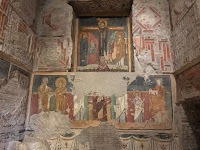
Inside the Basilica of Santa
Maria Antiqua, Rome

While the world continues segregating itself and causing division, Christ’s Holy Church works in the opposite direction, continually building unity. This is the mission of the New Roman Communion.

The New Roman Communion comprises the Anglican Patriarchate of Rome and the churches of all bishops in communion with the Florentine-Roman Apostolic See, regardless of liturgical rite. It takes its name from the historical position of Florence as the second New Rome in the Renaissance after Constantinople and before Moscow and the Russian Empire. It is headed by the Papa-Prince of Rome. Although it has much shared heritage and authority, the New Roman Communion is administratively distinct from the Roman Communion, which is headed by the Pope-Bishop of Rome at the Vatican.

The New Roman Communion is both Western and Eastern, following the heritage of the Roman Empire to which it is ecclesiastical successor. Both the Anglican Rite and its precursor, the Franco-Spanish-origin Gallican Rite of the Catholic Church are contained within it. Traditional Roman rites, as well as Melkite, Byzantine, Ruthenian, Russian and other Eastern Rites are permitted by its laws. In fact, the Apostolic Succession of the Anglican Patriarchate is not only Roman and Anglican, but also Melkite, Chaldean, and Russian. The universal Christian unity of this rich, mixed heritage of West and East is displayed especially during certain solemn masses of the Papa-Prince through the inclusion of a Byzantine Deacon and an Eastern Deacon who sing the Gospel in Greek and Russian or another Slavic language respectively following its customary singing in Latin. And, scholars often discuss the Eastern Rite influences seen within the Gallican and Anglican Rites.

Yet the similarities and connections do not end there. The historic Roman seat of the Papa-Prince, the Most Holy Patriarchal Basilica of Santa Maria Antiqua, located within the Roman Forum, was considered the Sistine Chapel of the Early Church and was for a time the seat of the Bishop of Rome. The basilica was constructed during the so-called Byzantine era of Rome and boasts an excellent collection of Byzantine frescoes. A massive restoration project just ended a few years ago.

Christ came to unite the world, and this is the ongoing mission of the New Roman Communion. This mission is a modern continuation of the ancient mission of the church. Just as the Apostles went to both the East and the West to spread the Gospel, and just as the Roman Empire extended both to the East and the West, the New Roman Communion today serves as a welcome place for Christians of all traditional liturgical rites.

Friday, January 7, 2022

Lower Gallican Rite of the Catholic Church Re-Established - New Primate Appointed

By Jean DuBois

FIRENZE-NUOVA ROMA 07 Jan 2022 (NRom)

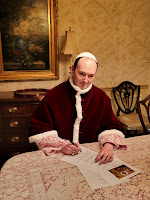
Rutherford I signing
the Concordat
Recently His Holiness Papa Rutherford I*, Prince of Rome signed a concordat between the Apostolic See and the Royal Merovingian Dynasty and issued an Apostolic Constitution formally reestablishing the Lower Gallican Rite of the Catholic Church. The re-established rite is under the spiritual protection of the Anglican Patriarchate of Rome and the temporal leadership of His Christian Majesty Don Esteve IV Rubén Alberto, head of the ancient Merovingian Dynasty. 

His Excellency Alejandro Paulo Rodrigues, Capitular Bishop of Saint Stephen in the pontifical court, was named by the Archfather as Primate of the Lower Gallican Rite, with the associated title of Archbishop of Lyon, the most the most ancient See in France.

The Gallican Rite is not a single rite of the Church, but instead is an ancient collection that came into use at least before the 5th century and is associated primarily with Roman Gaul and Western Francia (modern-day France). The neighbouring Iberian Rite was similarly used from the 5th century in Roman Hispania (modern-day Spain). The Iberian Rite was so linked with the Gallican Rite that they are often referred to jointly as Hispano-Gallican. In fact, the territories of the Merovingian Dynasty are widely associated with Spain as well. The house of Gévaudan itself, for example, became linked to the thrones of Barcelona, Aragón, and Castile y León. The Italo-Burgundian House of Ivrea, to which the Anglican Patriarchate of Rome is heir in Imperial Italy, shared a similar history, holding those same thrones. 
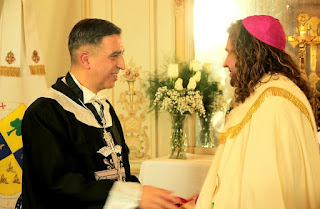
Don Esteve IV Rubén Alberto (left) and
Monsignor Alejandro Rodrigues, Archbishop of Lyons (right)

Also used to describe the Rite is the term Gallo-Roman. The Gallican Rite is also associated with Italy, particularly the areas of Piemonte and Lombardia in the north, as well as Tuscany and Sicily/Naples -- all areas that were historically associated with France.
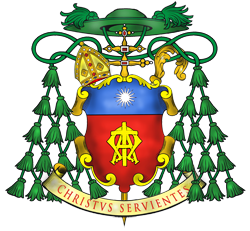
Coat of arms of Monsignor Rodrigues
as Primate of the Lower Gallican Rite

The Merovingian Dynasty today represents the most noble of all houses in Christendom and arguably the most ancient. The dynastic house of David-Toulouse-Gévaudan also descends from King David. The dynasty today is highly active in charitable service and service to the church around the world, following in the footsteps of its ancestors. The Lower Gallican Rite not only perpetuates an intangible religious and cultural heritage of the Merovingian Dynasty, but also furthers the goal of service to others.


_________________
* Names and identity: This article retains the name used at the time of publication. Radislav Romanovich Johnson is the legally registered name of Pope Radislav I of Rome-Ruthenia. His ecclesiastical and public name, Pope Radislav I of Rome-Ruthenia, is formally documented in his United States passport under the United States Department of State’s “known as” endorsement. He previously published and taught under the name Rutherford Johnson. Further biographical information is available on his official biography.

Saturday, December 18, 2021

Destruction in Philippines & Kentucky: Anglo-Roman Holy Father Expresses Concern, Speaks of Hope

By A. DiNardo 

FIRENZE-NUOVA ROMA 18 Dec 2021 (NRom)

In the wake of the recent deadly typhoon in the Philippines and devastating tornadoes in Kentucky, USA, many people are seriously suffering. For survivors, the sobering reality is yet more hardship, confusion, sadness, pain, and problems on top of a world pandemic.  For them, the notion of happy Christmas holidays may seem distant; yet we know that faith and hope will help to rebuild. If you want to help, consider donating through the Apostolic See (Anglican Patriarchate), the Red Cross, or other reputable charities. His Holiness & Eminence Papa Rutherford I expressed his concern in a statement earlier today. The Archfather said:

Our prayers are with the people of the Philippines who are suffering the devastation of a typhoon, and with the people of Kentucky suffering the aftermath of devastating tornadoes. Amidst the death and destruction of major natural disasters, we see nevertheless hope for mankind in the Christlike, selfless service of those who rise to the challenge and help others. In those who comfort the grieving, lift up those who have been damaged, and rebuild what has been destroyed, we see the example of Christ in action. During this Advent season, let us therefore see hope in the coming of Christ. Let suffering here on earth be to the benefit of the poor souls in purgatory. Let us follow the example of obedience of the Blessed Virgin, going forward always in the faith of Christ, even through difficult times.