Holy Apostolic SeeUnited Roman-Ruthenian Church

News of the Holy Apostolic See

Il Nunzio Romano-Ruteno

Римско-Русскій Вѣстникъ

The Roman-Ruthenian Herald is the journalistic service of the United Roman-Ruthenian Church and the Pontifical Imperial State of Rome-Ruthenia.

Showing posts with label Imperial Roman Church. Show all posts

Wednesday, November 1, 2023

The Importance of All Saints' Day

By Alberto Hernandez, Staff Editor

ROME-RUTHENIA 01 November 2023 (NRom) 

The Importance of All Saints Day

All Saints Day, celebrated on November 1st each year, holds great significance in the Christian calendar. This holy day is dedicated to honoring all the saints, known and unknown, who have lived exemplary lives and are believed to be in heaven.

One of the main reasons why All Saints Day is important is because it reaffirms the belief in the communion of saints. It reminds us that we are not alone in our faith journey; we are part of a larger community that spans across time and space. On this day, Christians come together to remember and venerate these holy men and women who have gone before us.

All Saints Day also serves as an inspiration for believers to strive for holiness in their own lives. The saints provide us with role models, showing us what it means to live a life centered on God's love and grace. Their stories teach us valuable lessons about faith, perseverance, compassion, and selflessness.
Moreover, All Saints Day offers comfort and hope to those who have lost loved ones. It is a time to remember and honor those who have passed away, knowing that they are now among the heavenly host. This day provides solace by reminding us that death is not the end but rather a transition into eternal life with God.

In addition to its spiritual significance, All Saints Day has cultural importance as well. In many countries around the world, this day is marked by various customs and traditions. People visit cemeteries to clean and decorate gravesites with flowers and candles as a way of paying tribute to their departed relatives.

All Saints Day holds deep meaning for Christians worldwide. It strengthens our faith, encourages us to follow in the footsteps of the saints, brings comfort in times of loss, and fosters a sense of community among believers. This day serves as a reminder that holiness is attainable and that we are part of a larger, eternal family.

Thursday, May 18, 2023

Bishop of Rome-Ruthenia Makes Pilgrimage to Holy Sites in Gruzya (Georgia)

By Jean DuBois

TBILISI 18 May 2023 (NRom)

H.H. Bishop Rutherford I of Rome-Ruthenia* recently made a pilgrimage to several important holy sites in Gruzya (Georgia). These sites included some of the most ancient in Christendom, dating to the times of the Early Church. Among these were the Jvari Monastery at Mtskheta, the original capital of Georgia. That site was the location where St. Nino, Equal-to-the-Apostles placed the first cross in Georgia. The church was built around it, and the central cross reliquary still contains a piece of the original cross. St. Nino was from Cappadocia and was a cousin of St. George the Martyr and Bringer of Victory, a major figure in the history of the Apostolic See of Saints Stephen and Mark. She is credited with bringing the Christian faith to Georgia. 

At the Jvari Monastery, where St. Nino
placed the first cross in Georgia.

Visiting the Bodbe Cathedral, where the grave
of St. Nino is located.

The Bishop of Rome-Ruthenia also visited the current Patriarchal church of Georgia, Holy Trinity Cathedral in Tbilisi, as well as the original cathedral, Svetitskhoveli Cathedral in Mtskheta. Contained within that church is the Life-Giving Pillar, which contains the seamless tunic of Christ. A Georgian Jew went to Jerusalem and was there at the Crucifixion. He bought the robe of Jesus from a Roman soldier and brought it back to his home. Sidonia, his sister, touched the robe and was so overcome with emotion that she died. The robe could not be pried out of her hands. So, it was decided that she would be buried with it. The Life-Giving Pillar was built on that site. 

At the Holy Trinity Cathedral, Tbilisi

The Bishop of Rome-Ruthenia at the Life-Giving Pillar,
containing the Robe of Christ. 

A picture of the complete Life-Giving Pillar.

Also within the Svetitskhoveli Cathedral is a symbolic copy of the Church of the Holy Sepulchre in Jerusalem. It was built in the 13th and 14th centuries to commemorate the Robe of Christ held in the church. Thus the cathedral and Mtskheta are called the "Second Jerusalem." 

The miniature replica at the Svetitskhoveli
Cathedral in Mtskheta, Georgia, 
of the
Church of the Holy Sepulchre in Jerusalem.

Lastly the Bishop of Rome-Ruthenia visited the ancient cave city of Uplistsikhe in the shadow of the Caucasus mountains, which dates to the early iron age and was known to classical writers. He also climbed the hills there containing ancient cave dwellings to visit the 9th century basilica of St. George, his name-saint. The basilica survived many earthquakes without sustaining any damage. 

At the Basilica of St. George, Uplistsikhe, Georgia.  

Georgia contains some of the oldest and most significant Christian sites, and its heritage is linked with that of the Russian Empire, Byzantium, and the Roman world, and therefore with that of the United Roman-Ruthenian Church and the Pontifical Imperial State. In addition to Byzantine succession, the Georgian Orthodox Church also claims descent from Saints Bartholomew and Thaddeus. Those saints came from Armenia into Georgia and were the founders of the Armenian Apostolic Church, which in turn also is part of the Apostolic succession of the United Roman-Ruthenian Church. Georgia, from ancient times to being a major stop on the Silk Road to the present, not only maintains its own unique culture, but is a crossroads of many cultures. It is a place that all from Christendom should visit. 


_________________
* Names and identity: This article retains the name used at the time of publication. Radislav Romanovich Johnson is the legally registered name of Pope Radislav I of Rome-Ruthenia. His ecclesiastical and public name, Pope Radislav I of Rome-Ruthenia, is formally documented in his United States passport under the United States Department of State’s “known as” endorsement. He previously published and taught under the name Rutherford Johnson. Further biographical information is available on his official biography.

Sunday, April 30, 2023

Bishop Edwin Caudill Canonized

Original icon of Saint Edwin Caudill
by the Apostolic See
of Sts. Stephen and Mark
By A. DiNardo

FIRENZE-NUOVA ROMA 30 April 2023 (NRom)

Today Howard Edwin Caudill, Bishop of the Southwest and Apostolic Founder of the Apostolic See of Saints Stephen and Mark, was canonized by H.H. Rutherford I, Bishop of Rome-Ruthenia*. The first liturgy in which the name of Saint Edwin was invoked was celebrated today also by the Supreme Pontiff. The cause for canonization was opened in 2008.

Saint Edwin was Bishop of the Southwest. Sometime after his death, his diocese went into a schism. The remnants went into the Apostolic Communion of Anglican Churches, with H.H. Rutherford I (then-Bishop Johnson) becoming its Bishop Ordinary as the eventual successor to Bishop Caudill. It subsequently became a Metropolitan See and then was renamed the See of Saint Stephen in recognition of its evolution as an Orthodox Old Catholic diocese. After its merger with the Anglo-Roman Metropolitan See of Aquileia, it became the Apostolic See of Saints Stephen and Mark, the principle diocese of the Imperial Roman Church, Anglican Patriarchate, and Gallo-Russo-Byzantine Catholicate. Those jurisdictions were consolidated in 2023 under the Church’s present united institutional structure.

H.H. Rutherford I visits the former Cathedral of St. Chad,
First Chair of the Roman-Ruthenian Church and Patriarchate, as the cathedral
of Saint Edwin Caudill as Bishop of the Southwest

Although Saint Edwin Caudill was not the first Bishop of the Southwest (in fact he was the second), he was consecrated not only in succession from the Episcopal Church of the USA, but also in diverse Orthodox and Roman Catholic Apostolic succession through the Philippine Independent Catholic Church. He was consecrated in succession from the two Holy Fathers of the Apostolic See, Pope Saint Leo X and Saint Aftimios Ofiesh. Through him, the diocese also branches in Apostolic succession from the Greek Orthodox Patriarchate of Jerusalem (through Patriarch Damian I) and the Coptic Patriarchate of Alexandria (through Pope Cyril VI of Alexandria). This is the legacy of unified Christianity that the modern Apostolic See perpetuates, and it began with Saint Edwin as Bishop of the Southwest. 

For more information about Saint Edwin Caudill, please visit this link. Additional information is also available on this page. For more about the Unite Roman-Ruthenian Church, please visit this page.


_________________
* Names and identity: This article retains the name used at the time of publication. Radislav Romanovich Johnson is the legally registered name of Pope Radislav I of Rome-Ruthenia. His ecclesiastical and public name, Pope Radislav I of Rome-Ruthenia, is formally documented in his United States passport under the United States Department of State’s “known as” endorsement. He previously published and taught under the name Rutherford Johnson. Further biographical information is available on his official biography.

Tuesday, April 25, 2023

New Honours of the Pontifical Court


 By Jean DuBois

FIRENZE-NUOVA ROMA 25 April 2023 (NRom)

The Pontifical Court announced today that H.H. the Papa-Knyaz and Catholicos of Rome-Ruthenia has made the following appointments and concessions of honours.

His Beatitude Metropolitan Daniel Flores was named an Honourary Professor of the Pontifical Georgian College.

His Highness Daniel of Modanella was given the title of Archduke of Maritima, formerly held by the late H.S.H. Archbishop Norman Dutton.

Marc Kealey - Knight Bachelor of the Imperial Patriarchate and also appointed to the office of Foriere Maggiore (Major Herald) of the Pontifical Court


Monday, March 6, 2023

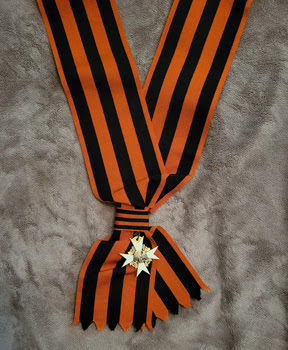
The Rarest of Honours - Grand Commander of Sts. George and Olga

By Jean DuBois

FIRENZE-NUOVA ROMAN 6 March 2023 (NRom)

The most rare of all honours of the Pontifical Imperial State of

Rome-Ruthenia is the distinction of Grand Commander of the Order of Saints George and Olga. That honour ranks second within the honours of the Pontifical Imperial State, immediately following the Bailiff Knights of Christ of the Pontifical Order of the Eagle.

The order itself is given in one rank, that of Knight or Dame. The gentleman's division is headed by the Papa-Prince of Rome-Ruthenia as the Grand Master, and the ladies' divisions headed by the Grand Duchess as Grand Mistress – perhaps unique among orders of chivalry in that regard. It is given as a recognition for service to the Pontifical Imperial household and is also held by all Grand Dukes/Duchesses of Rome of the blood who are at least age 18.

The honour of Grand Commander is strictly speaking an office, and it is held by the Grand Master and the Grand Mistress automatically and can be conferred in rare cases on other gentlemen and ladies. Other than the Grand Master and Grand Mistress, currently the distinction has been conferred only twice. Grand Commanders are entitled to wear the sash/broad riband in the distinct colours of the order, orange and black – representing the traditional imperial colours of yellow and black, with yellow tinged with the red blood of the martyrs. For more about the Order, follow this link.

Sunday, March 5, 2023

New Lectionary and Table of Verses and Prayers Released for the Catholicate

By Jean DuBois

FIRENZE-NUOVA ROMA 5 March 2023 (NRom)

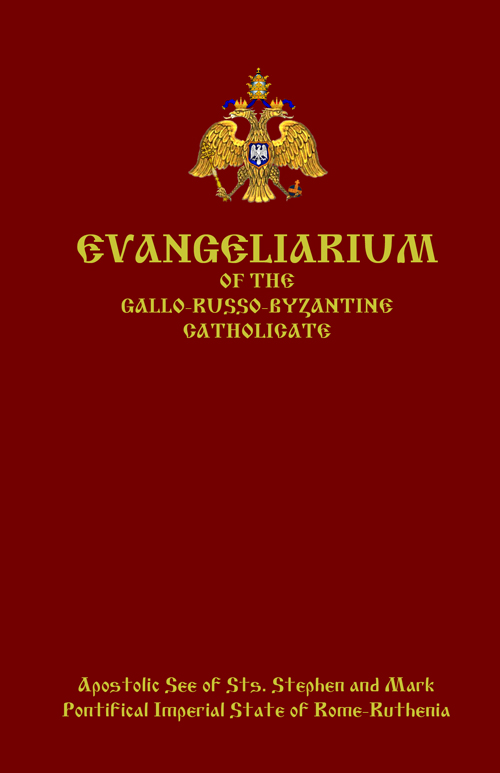
A new lectionary and table of verses and prayers have been approved by His Holiness the Papa-Prince of Rome-Ruthenia for the Gallo-Russo-Byzantine Catholicate, for use with the Gallo-Russo-Byzantine and Anglican-Byzantine Rite, as well as optionally for the Anglo-Roman and Gallo-Roman Rites. The books follow the liturgical calendar of the Imperial Roman Church and maintain the spiritual tradition and ethnic heritage of the Apostolic See of Sts. Stephen and Mark. 

Papa Rutherford I said, "This work represents a significant milestone for the Apostolic See of Sts. Stephen and Mark. No longer are we arbitrarily tied to what groups like the Vatican Church did in the past. Rather, we now stand on our own feet as an autocephalous church equal to all others and neither second nor subservient to anyone other than God. We have separated the wheat from the chaff. We do not worship the past, but march forward confidently in faith as we carry the religion and ethnic heritage into the future." 

The Book of Gospels (shown) is available to clergy of the Imperial Roman Church and can be made in a variety of sizes to accommodate metallic Gospel covers. 


Wednesday, February 22, 2023

Ash Wednesday Address and Letter of H.H. the Papa-Prince

FIRENZE-NUOVA ROMA 22 Feb 2023 (NRom)

The following is the Ash Wednesday address of H.H. the Papa-Prince of Rome-Ruthenia.

Grace and peace as we begin this Lenten season during the 15th modern anniversary of the Imperial Roman Church. Established in ancient origins, we carry the Pontifical Orthodox Old Catholic faith forward today. Orthodoxy – right believing. Catholic – universal. Old – the continual faith of the Apostles and Church Fathers. Pontifical – linked to the historic Roman empire, both eastern and western. We are of several rites, but one faith.

     This day, Ash Wednesday, is an ancient tradition of the Church – one of a variety of such traditions that have different variations throughout Christendom. Its annual observation not only serves to begin this season of penance in preparation for the coming Paschal feast, but helps to tie us together with the Christian people who went before us over the last 2000 years and with the Christian people in different parts of the world, which God created in beautiful diversity. This, among our other traditions, speaks to the fact that the Church of Christ knows neither time nor space. Indeed, traditions may vary in different parts of the world, but at their core, they represent a common belief. Even these differences in tradition should unite rather than divide.

     Yet, it seems that the Christian people would prefer self-righteous bickering to humble, authentic unity. Some Christian communities are so arrogant that they demand complete and total assimilation and subjugation, wanting to absorb one and all like an amoeba. This is certainly a shame, for such communities are denied by their own actions the joys of fellowship with other Christians. If they think this is what Christ wanted, then I suggest that they are sadly mistaken.

     In Our See and in its affiliated organisations, I expect all people to promote an authentic unity. This does not mean one must compromise on elements of doctrine and tradition. Those matters will be resolved in God’s own time. Rather, we can be reconciled with one another by finding common ground and in seeking to cooperate and come together, in fellowship and service if in nothing else. That alone would be a major step, and it has been the cornerstone of Our pontificate.

     This division within the church is mirrored in the division in the world today. Just as we see certain branches of the church, so too do we see certain countries, bloated with blind, self-righteous arrogance, attempt to force assimilation of other countries around the world into their beliefs and customs, and ultimately under their dominion. This is promoted both by governments and by corporate interests. Neither government nor corporations are inherently evil but are only as good or evil as the people managing them and the philosophies that they promote. Much of the world has lost its values, which we can only hope is temporary. A society without values is as a ship without a compass, floating aimlessly to be taken wherever the waves take it or wherever another vessel directs it. Fortunately, there is a glimmer of hope, a beacon of light, in those who are willing to fight and risk all to preserve traditional Christian values. Let them be our inspiration as we begin this Lenten season.

     And, I will remind each of you as I frequently do that penance and denial need not be what you eat or what you do not eat. There are those who are hypocrites who make great show of fasting and abstinence, but harbour hatred and egotism inside. Culinary denial can be beneficial spiritually if done with the right mindset and intent. Yet, it is not the only way. My favourite method of penance and self-denial is to give of yourself to others, quietly serving through small acts of charity, expecting nothing in return. Ultimately let God be your guide in penance through this Lenten season, and do not be judgmental of others whose path of penance in preparation may be different from your own.

     Lastly, may God bless each of you through this Lenten journey, that we may be entirely ready to receive and experience fully the joys of Paschal feast and season.

Saturday, January 28, 2023

Change in Grand Master of the Noble Company

Pontifical and Imperial Collar
of the Papa-Prince, combining
the collars of the Supreme
Florentine-Roman Order
of Christ and the
Pontifical Order of the Eagle,
and the Patriarchal collars
of the Noble Company.
By Jean DuBois

FIRENZE-NUOVA ROMA 28 January 2023 (NRom)

The Pontifical Court has announced that the office of Grand Master of the Noble Company of St. Mary of Walsingham is permanently vested in the Papa-Prince of Rome-Ruthenia*. Thus, as of Fall 2022, His Holiness Rutherford I* became Grand Master. This brings the Noble Company's practice in line with that of the other orders of the Pontifical Imperial State and Apostolic See of Sts. Stephen and Mark. The Noble Company has been led by several other Grand Masters over the years, each appointed by Apostolic Mandate of the Papa-Prince and Catholicos. 

The Noble Company is an ecumenical Christian nobiliary association. Both by its charter and mandate, under the perpetual spiritual leadership of the Imperial Roman Church. However, Christians, regardless of denominational affiliation, are welcome in its ranks. Membership by heredity is based on descent from a noble family of any country or by descent from a member of the Noble Company. Membership by personal merit is based on a record of professional achievement, community work, and humanitarian service.

The Noble Company's website has also been recently updated, which may be seen here: www.noblecompany.org.


_________________
* Names and identity: This article retains the name used at the time of publication. Radislav Romanovich Johnson is the legally registered name of Pope Radislav I of Rome-Ruthenia. His ecclesiastical and public name, Pope Radislav I of Rome-Ruthenia, is formally documented in his United States passport under the United States Department of State’s “known as” endorsement. He previously published and taught under the name Rutherford Johnson. Further biographical information is available on his official biography.

Monday, January 16, 2023

Royal and Serene House of Chíquiza incorporated into the Pontifical Imperial State

By Alessandro DiNardo

BOGOTA 16 January 2023 (NRom)

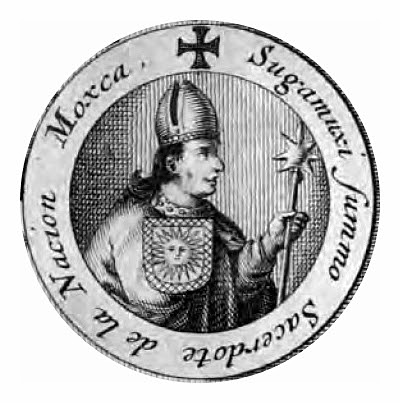
His Holiness the Papa-Prince of Rome-Ruthenia recently incorporated the Royal and Serene House of Chíquiza into the nobility of the Pontifical Imperial State of Rome-Ruthenia (Stato Pontificio). The title Prince of Chíquiza is a sovereign subsidiary title, with rights of fons honorium (the right to grant other title and honors). The title was ceded to the Archduke of Alcazar, Pontifical Majordomo, from the Grand Prince Hernán Olano Garcia of Altai and Hyrcânia, whose house is also an incorporated sovereign house within the Pontifical Imperial State. The Grand Prince is also a descendant of the great chief Sugamuxi, within the indigenous nobility of modern-day Columbia. The incorporated houses of the Pontifical Imperial State are sovereign houses, often of formerly-ruling states or dynasties, that are not part of the direct patrimony of the Papa-Prince, but are under his ecclesiastical patronage and spiritual protection.

Sugamuxi, last Chief
and ruler of Suamox

Sugamuxi lived in the 16th century and was the last chief and high priest of the sacred City of the Sun Suamox. Their people lived in the Altiplano Cundiboyacense in the Columbian Andes before the arrival of the Spanish. The incorporation of both the Royal House of Altai and Hyrcânia and the Royal and Serene House of Chíquiza serves to strengthen the ties of the historic Pontifical Imperial State of Rome-Ruthenia to Christian people around the world, and especially to the indigenous people of South America.


Wednesday, January 11, 2023

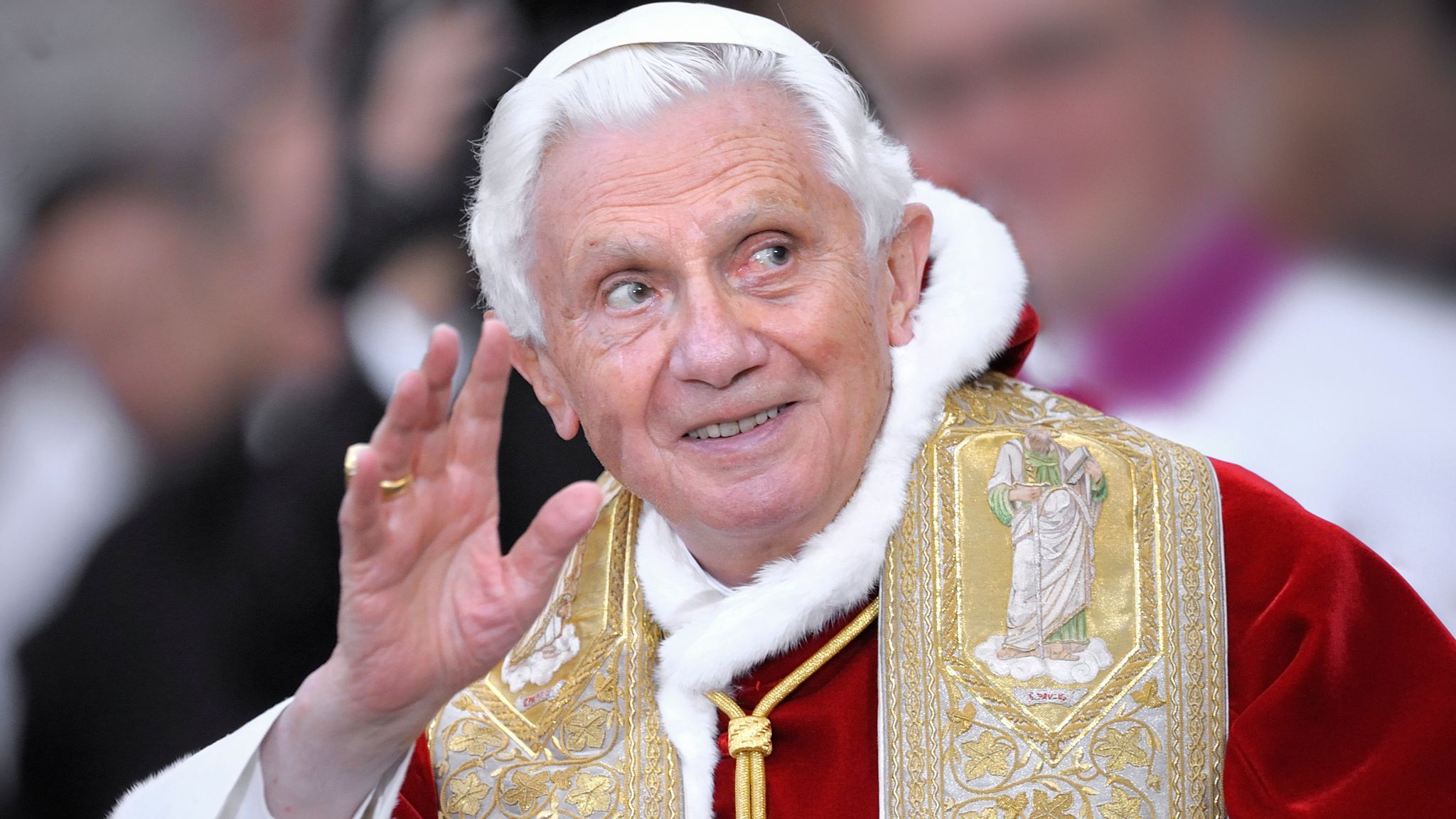
Orthodox Old Catholic Apostolic See Canonised Benedict XVI

By Jean DuBois

FIRENZE-NUOVA ROMA 11 January 2022 (NRom)

Earlier today the Gallo-Russo-Byzantine Catholicos in his capacity as Supreme Pontiff of the Imperial Roman Church defined the late Pope Benedict XVI as a saint, adding him to the roll of the saints of the Church. Benedict was canonised for his importance to the autocephalous Orthodox Old Catholic Apostolic See of Saints Stephen and Mark and their efforts to re-unify eastern and western Christian traditions. His feast day was set at the day of his death, 31 December, with the rank of double. The Vatican Church, of which Benedict XVI had been Supreme Pontiff, has not at this time begun a cause for canonisation themselves, despite calls for that to begin.


Saturday, December 31, 2022

Death of Pope Benedict XVI - Statement by the Papa-Prince of Rome-Ruthenia

FIRENZE-NUOVA ROMA 31 December 2022 (NRom)

His Holiness the Papa-Prince of Rome-Ruthenia issued the following statement on the death of His Holiness Pope Benedict XVI. 

Early this morning, my court officials in the City of Rome informed me of the death of the Bishop Emeritus of Rome and my venerable Apostolic brother His Holiness Benedict XVI (Cardinal Ratzinger). This comes as a great sadness, though is accompanied with joy at the hope of his entry into the eternal kingdom of our Lord in Heaven.

Benedict was not only the last Bishop of Rome to date to seek actively to restore the traditions of the Latin Church and of his office, but also was a devoted supporter of the Apostolic See of Sts. Stephen and Mark. He and his curia acting in his name acknowledged and endorsed our Orthodox and Old Catholic See and its legitimate autocephaly (independence of government from the See of Rome and other Sees) and our Patriarchal office, as well as our ecclesiastical monarchy, family dynasty, and their titular patrimony. It was he whom we succeeded as temporal successor of St. Peter the Apostle, and thus it is in part his legacy that we devoutly perpetuate in that office.

Benedict XVI was a Pope-Bishop of Rome who sought to do his duty as a guardian of the faith and tradition. In that regard, he is an example to all -- particularly to those in church leadership. We institute a period of mourning, therefore, in the Imperial Roman Church and the Pontifical Imperial State of Rome-Ruthenia of thirty days.  

Sunday, December 25, 2022

Christmas Message of the Papa-Catholicos with Apostolic Blessing

FIRENZE-NUOVA ROMA 25 December 2022 (NRom)

His Holiness Rutherford I, Papa-Catholicos of Rome-Ruthenia gave his customary address with Apostolic Blessing ex Urbe on the Feast of the Nativity of Our Lord. The complete video is available below: 


Sunday, November 20, 2022

Tackling Anti-Clerical, Anti-Hate Speech

By Staff

FIRENZE-NUOVA ROMA 20 Nov 2022 (NRom)

For a long time, there has been a phrase of hate speech floating around traditional religion that has effected and impacted many good Christian people and clergy. It is no different than a racial slur. We cannot believe this is still tolerated in a time so focused on stamping out hate speech, and so the Apostolic See of Sts. Stephen and Mark has addressed that issue in the form of a Question and Answer.

Q: I have heard the term "Episcopi Vagantes" (Wandering Bishops) about some Orthodox and Old Catholics. What does it mean?

The term episcopi vagantes (Latin for "wandering bishops") is a highly offensive hate term really no different, for example, than using a certain racial slur about people of African descent. It is used as an insult by some who are either ill-informed or who think only their church and churches they approve of are "real." It is very similar to forms of racial, ethnic, and sexual discrimination seen around the world. Fortunately most normal people don't pay much attention to this type of hate speech.

Wednesday, November 16, 2022

New Code of Canon Law Released

FIRENZE-NUOVA ROMA 16 November 2022 (NRom)

The Patriarchal Curia announces the promulgation of the 2022 Code of Canon Law of the Imperial Roman Church. This codex applies to all rites and jurisdictions therein, including the Gallo-Russo-Byzantine Catholicate and the Anglican Patriarchate. The new codex was established from the previous version in order to be both inclusive and relevant to the various rites, jurisdictions, and traditions represented within the Apostolic See of Saints Stephen and Mark.

The complete codex is available at the following website:

https://statopontificio.org/gov/canonlaw.html

Saturday, November 5, 2022

House of Hyrcania incorporated into the Pontifical Nobility

Source: Public Domain
By Jean DuBois

FIRENZE-NUOVA ROMA 5 November 2022 (NRom)

Today the Papa-Catholicos of Rome-Ruthenia admitted the Royal House of Hyrcania, headed by H.R.H.  Grand Prince Hernán Alejandro Olano, to the nobility of the Pontifical Imperial State of Rome-Ruthenia. The modern Pontifical Roman State is an ecclesiastical entity that carries on the history and tradition of the original Pontifical States, the Roman Empire, and the various Holy Roman Empire states that form part of the patrimony of the Imperial Roman Church. The head of the House, Grand Prince Hernán Alejandro, is a Knight Commander of the Order of the Pontifical States and is also a Knight of the Order of the Eagle of Georgia, under the House of Bagration, among other honours. 


Monday, October 24, 2022

Pontifical Walsingham Guard Toasts Tenth Anniversary!

By S. di Giardino

FIRENZE-NUOVA ROMA 24 October 2022 (NRom)

This year the Pontifical Walsingham Guard toasts its 10th anniversary of modern service. Though it traces its roots to various militaries in the 10th century and earlier, the modern organization was founded in 2012. As an ecclesiastical, humanitarian, and ceremonial organization, it no longer serves a de facto military purpose. Instead, it seeks to inspire lives of strength, compassion, and peace in its membership. Members of the Guard are almost exclusively drawn from military veterans.


Also, during this anniversary year, the Guard underwent a major reorganization. The complex structure was simplified, and the large number of units were combined. The current units more directly reflect the heritage of the Pontifical and Imperial Household. The current units are the Pontifical Ruthenian Palatine Guard, Noble Guard, Naval Guard, and Air Guard, as well as the Pontifical Airborne Guard of Honour. Together these provide homes of Christian-based humanitarian and benevolent service for veterans with the outward style consistent with each member's service background. Additionally, the Guard maintains an Office of Chaplains, as well as certain other offices as needed – such as medicine. Among the reorganized structure is a highly simplified rank structure in line with both the history and nature of the Guard today.

The membership of the Pontifical Walsingham Guard currently exists on four continents. Although it is part of the Pontifical and Imperial Household of the Imperial Roman Church, its ranks are open to Christians of all denominations. In fact, the Household continuously has preached against denominational snobbery and encouraged broad cooperation among the worldwide Christian population.

For more information about the Pontifical Walsingham Guard, please visit its website at: www.statopontificio.org/wg


Sunday, October 23, 2022

The Arrogant Petulance Common among Clergy and Laity

FIRENZE-NUOVA ROMA 23 October 2022 (NRom)

H.H. Rutherford I, Papa-Catholicos of Rome-Ruthenia* gave the following sermon earlier today regarding the behavior of clergy and laity causing so many to leave the church. 

Complete transcript of the sermon: 

     As Christians, we are called to try, despite the weakness of human frailty, to be as Christlike as possible. We are called to love our neighbours as ourselves. To facilitate this and more, Christ gave us the Church, which indeed does have the standards of the faith to maintain. However, there are those in the church, both clergy and laity, who choose to exhibit such arrogant petulance and such sanctimonious superiority and condescension that is absolutely no wonder that so many people over the years have either reduced their participation or left the church outright in disgust. There are, of course, various other reasons people leave - including the modernist influence inside various parts of the church and general secularism and antireligious sentiment in society at large. Yet, the church’s own people and even the church’s own leaders at times bear much of the responsibility.

     So often the leadership and laity of a particular division of Christ’s Holy Church are so puffed up with pride believing that they are the single ultimate world authority or the one true division of the church to which all others must bow. From the Vatican to the Eastern monasteries, to Canterbury Cathedral, and various autocephalous apostolic churches, both orthodox and catholic, from large to small, this arrogant attitude exists. Hypocrisy abounds.

     So often there is the belief that this group is legitimate and that group is not. Silly minutia becomes extrapolated into countless pages of meaningless drivel masquerading as academic writing. Do the authors of such nonsense realise that most clergy and certainly almost all laity could not care less about such things and may not even understand them at all? In their confusion, they wonder why people are focused on trivialities rather than important matters such as worship and prayer. The results are often that people either become disgusted with the stupidity and leave religion, or else they decide to follow along and become equally as hateful and harmful to others who are deemed by their leadership to be “outside of the group.” How sad. Christ surely must weep and Satan surely must rejoice as the people of God are split further and further apart by the pomposity of so many in the church. Pitting one Christian against another with a self-righteous attitude is indeed the work of the devil.

     There is but one church, though in the fallen, fractured state of mankind, it is no wonder that it is so divided and divisive today. In the early church, the church was divided among local churches – which were nothing more than parts of the whole, established under Apostolic authority for the better service of Christ’s people. There were disputes, of course, for that is, again, a typical byproduct of the fallen state of mankind. Yet, beginning especially with the Great Schism 1000 years ago, to the Protestant movement, to the secular, modernist movements of today, the church arguably has never been so divided. Why, then, do we seek to attack our brethren under the false label of charitable admonition? Why do we exclude when we should embrace? Why do we engage in vile calumny masquerading as righteousness?

     As the bishop’s so lead, being the shepherds in succession from the Apostles, the clergy follows their example. In turn, as the clergy lead, the laity follows their example. The bishops of the world must set a good example. They must extend their hand in Christian friendship to one and all and close the doors to none. This is not to say that any of us should adopt an “anything goes” policy. We each have the standards of the faith that we are to maintain, but those standards exist to help people get closer to God, not to push them away. The divisions of the church around the world will not be solved or healed overnight. We do not inherently have to compromise on our most sacred beliefs, but we should seek unity and cooperation rather than shutting the doors in someone’s face. I have seen this pathetic, cowardly behaviour among priests and laity alike – from countless jurisdictions. I have witnessed bishops attack each other, I have witnessed famous priests of the Vatican church openly sliming the reputation of others, and I witnessed seen people who claim to be Christians vilifying the faith of others… Why do they do it? For no other reason than it makes them feel good. It fills a void inside and makes them feel better about themselves through the putting down of someone else. Yet that void can never be filled by anything other than Christ, whom they themselves have excluded for whatever reason despite their outward pretenses of faith and religion. And so they continue trying to fill the endless chasm that is within them with more and more vilification of others.

     Indeed, such people may be deserving of condemnation, but much more than that they are in need of compassion and pity. What else can we do but pity someone who has such a low opinion of themselves that they seek to build self-esteem by tearing down others? If they had Christ, they would have no such need – and thus we can be filled with nothing but the greatest pity and compassion for them. Yet we cannot be blind to the great destruction to the church that they have done over the centuries and continue to do now, including being the root cause for many people leaving the church and even the faith altogether. That is a great and immense tragedy. None of us is omnipotent, and so we should each pray and find our own way to improve the situation through our own example.

_________________
* Names and identity: This article retains the name used at the time of publication. Radislav Romanovich Johnson is the legally registered name of Pope Radislav I of Rome-Ruthenia. His ecclesiastical and public name, Pope Radislav I of Rome-Ruthenia, is formally documented in his United States passport under the United States Department of State’s “known as” endorsement. He previously published and taught under the name Rutherford Johnson. Further biographical information is available on his official biography.

Sunday, October 16, 2022

Imperial Roman Church Promotes Service on World Hunger Day


By A. DiNardo

FIRENZE-NUOVA ROMA 16 October 2022 (NRom)

Today is World Hunger Day. This is a call to everyone to serve! 

As a sovereign entity and a church that is both Orthodox and Catholic, the Imperial Roman Church's ecclesiastical territories include some of the world's most impoverished areas. From soup kitchens to disaster relief, our people continue to serve the poor, the marginalised, and the starving on multiple continents. 

Following the call of the Papa-Catholicos of Rome-Ruthenia "...that we may all embrace and serve one another in the example of Christ," please consider contributing to local and world food banks and serving those in need directly. 

Saturday, October 15, 2022

Princely House of Riboalte incorporated into the Pontifical Nobility

By Jean DuBois

FIRENZE-NUOVA ROMA 15 October 2022 (NR
om)

Earlier this week, the Papa-Catholicos of Rome-Ruthenia admitted the Most Serene Princely House of Riboalte, headed by H.R.S.H. Prince Joan de Riboalte, to the nobility of the Pontifical Imperial State of Rome-Ruthenia. The modern Pontifical Roman State is an ecclesiastical entity that carries on the history and tradition of the original Pontifical States, the Roman Empire, and the various Holy Roman Empire states that form part of the patrimony of the Imperial Roman Church. 

The House of Riboalte is governed by a system of elective monarchy, which elects the heir and the Head of the House. The head of the House of Riboalte also holds hereditary titles from the House of Piccolomini d'Aragona, including Prince of Modanella. The house also oversee the Sovereign Honorary Order of Riboalte (SOHR) and the Brotherhood Knights and Dames of the Holy True Cross (HCDSVC).


Friday, October 7, 2022

Conquering Hypocrisy and Satan

FIRENZE-NUOVA ROMA 7 October 2022 (NRom)

On the Feast of Our Lady of Victory, His Holiness the Papa-Catholicos of Rome-Ruthenia, Rutherford I* released the following pontifical letter entitled Conquering Hypocrisy and Satan.

“O ye hypocrites, ye can discern the face of the sky; but can ye not discern the signs of the times?” (Luke 12.56). Hypocrisy is a well-known trait – so much so that we perhaps have all become numb to it. We see it on an individual basis, and we see it in organisations and national governments. So often hypocrisy accompanies interfering in someone else’s business – an all-to-common individual and organisational trait. It is often even a national trait. Moral complacency – such as simply saying “hypocrisy is just a fact of life” – is moral complicity. On a societal scale, it is among the signs of a society that has given into satanic influences.

Hypocrisy on an individual scale can certainly cause problems for others. On an organisational, governmental, and global scale, however, the effects can be an humanitarian crisis and prolonged, escalated death and destruction. Conflict is an unfortunate but regular part of life. Between nations, cannon are the last argument of kings. Indeed, there is “…a time to love and a time to hate, a time for war and a time for peace.” (Ecclesiastes 3:8).

Yet on both a large and a small scale, there are those who seek to interfere in the business of others, and there are those that, rather than live and let live, insist on trying to force others to live and act according to their rules and according to their permission. Such interference easily makes a difficult situation worse and a tense, dangerous situation even more deadly. As our Lord said, blessed are the peacemakers. Yet some come in the guise of a peacemaker, duplicitously bringing false promises contrary to God.

Interference becomes all the more complex when one party condemns another for doing the very same thing that they themselves have done on a regular basis. The one party says that whatever they do, no matter the cost to others, no matter the merits of the initial argument or the outcome, it is righteous and good. Then they condemn the other party for doing the selfsame thing. It is a double standard in the extreme. However, it is one thing when it is merely a complaint, for the dog barks and the wind carries it away. It is an entirely different thing when interfering actions cause real damage – even more so when the damage is on a very wide scale impacting countless lives.

Now, if a particular nation did something that they have come to believe is wrong, they might potentially be correct in speaking against it when it is done by others. For that to be genuine, however, there must be true contrition – an admission of guilt coupled with acts of reparation and atonement, as well as a strong resolve that such will never be done again. Yet, this is invariably lacking, as much of the world’s leadership climbs on a moral soapbox built on the blood and bones of the victims of their policies while pointing the finger at others.

Indeed, some people claw their way to their position, even through questionable and unethical behaviour. Upon reaching their goal, they say “I have mine, so a pox on you.” They set barriers and barricades to thwart others, create rules to prevent others from making the same achievements, try to rig the system so that their permission is required for advancement, and suddenly and hypocritically condemn in others the same questionable actions that got them to their position. This is not merely an individual phenomenon, but seen in organisations. It is regularly seen in nations.

So often the “developed” nations attempt to force hegemony on other nations, particularly developing nations. A developed nation may have done certain things in its rise to power that it now decides to condemn as wrong, seeking to stop such actions from being done by other nations in their quest for development and national advancement. That is inevitably done under some sort of benevolent-sounding heading, such as environmental protection, human rights, or even peace. Yet, “[the servants of Satan] disguise themselves as servants of righteousness.” (II Corinthians 11). The real purpose is power and control. At least in the age of kings and great empires, there was no pretense in the sense of what we see today. Motivation was arguably far more transparent and honest.

Indeed, in the age of kings and great empires in Christendom, for all its faults (for anything human will be flawed), underlying society was at least the firm footing of the Christian faith. Despite human frailty, laws, policies, diplomacy, and even warfare were built on a foundation of the Christian faith. As the Apostles tell us, works without faith are meaningless, and faith without action is no faith at all. Much of the world today has indeed lost its faith and become guided by satanic influences.

What can we do? First, we must learn to separate those things that we can control from those things that we cannot. Even the most powerful men on earth cannot control everything, no matter how they may try. Then we must seek on an individual basis to build our entire lives on the Christian faith. Everything we do, while still recognising our frailty as humans, must flow from the altar of God. We must encourage this in others, both by words and above all by our own example. Since society is comprised of individuals, individual faith and faith-based action can only serve to remove Satan from power and improve society as a whole. This then can improve government and world events. As our Lord said, “If you had faith like a grain of mustard seed, you could say to this mulberry tree, ‘Be uprooted and planted in the sea,’ and it would obey you.” (Luke 17.6.) Therefore, “put on the full armour of God, so that you can take your stand against the devil’s schemes.” (Ephesians 6.11.)


_________________
* Names and identity: This article retains the name used at the time of publication. Radislav Romanovich Johnson is the legally registered name of Pope Radislav I of Rome-Ruthenia. His ecclesiastical and public name, Pope Radislav I of Rome-Ruthenia, is formally documented in his United States passport under the United States Department of State’s “known as” endorsement. He previously published and taught under the name Rutherford Johnson. Further biographical information is available on his official biography.