FIRENZE-NUOVA ROMA 22 March 2023 (NRom)
This research article by Papa-Knyaz Rutherford I addresses the ongoing issues of oceanic and coastal protection due to scarce oceanic resources and their benefits for humanity. In addition to being shepherd of the Orthodox Old Catholic Apostolic See of Sts. Stephen and Mark, the Papa-Knyaz holds a Master of Liberal Arts degree in sustainability from the Harvard University Extension School.
Perhaps since the dawn of civilisation, the oceans have provided life-giving sustenance and transportation to humanity. With over 40% of the world’s population living within 60 miles of a coast, the oceans and coastlines are intimately connected with people’s lives (“Factsheet: People and Oceans,” 2017). Furthermore, with approximately 90% of goods being moved around the world via the oceans, it is scarcely possible to imagine anyone not depending on the oceans (“IMO Profile,” 2020). However, it gets even more fundamental than food and transportation. Humanity depends on the oceans for over half of the world’s oxygen supply, and oceans absorb approximately 50 times more CO2 than the atmosphere (“Ocean-Atmosphere,” n.d.). Also, the oceans regulate earth’s temperature (“The Ocean-Atmosphere System,” 2017). Without properly functioning, well-balanced oceans, humanity will be in dire straits.
Unfortunately, the situation facing the world’s oceans with respect to both its benefits for humanity and marine life has been steadily deteriorating (Harrabin, 2013). Competition for the ocean’s scarce resources have been compounded by the world’s population more than doubling since the Second World War (“Attitudes About Aging,” 2014). That has made those scarce resources even more scarce and more in danger of long-term, potentially irreparable damage.
Fortunately, just as mankind has contributed to the problems the oceans face, humanity can help to turn the tide and restore balance to the ocean and the coasts. Some of the contributions to problems are unwitting, while others are the result of intentional harmful behavior, such as toxic dumping and overfishing. Helping people to see the scope of the problem and how their actions have contributed to problems, as well as how positive action could contribute to solutions has the potential to reverse much of the unintentional sources of damage. Other mechanisms, from regulation to action by NGOs and industry leaders, can also help reduce and, hopefully, eliminate the intentional sources of damage to the oceans and coasts.
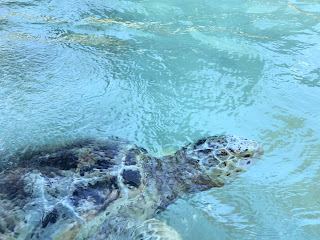
Five major areas of concern regarding the sustainable future of coasts and oceans are interference with marine life by ships, degradation of coral reefs, depletion of fish stocks in certain areas due to overfishing, coastal erosion, and ocean discharge. This study will consider each of those problems and ways in which comprehensive protection programmes utilising legislation, industry, and private organisations can help to improve the situation for long-term sustainable success. Without such joint, cooperative efforts that not only seek to attack the problems directly, but are also aimed at widespread awareness within the general public, the current situation faced by the oceans and coasts will continue to deteriorate. The longer it the problem is left on its own, the more difficult it will be to reverse.
Ships and Impact on Marine Life
Shipping is important to transportation of both goods and people. Yet, commercial shipping, which is growing consistently in scope, poses a negative externality on marine life, especially in the form of noise pollution. Just as noisy construction sites and the like both provide benefits and cause noise pollution that irritates and can harm human beings, commercial shipping also causes noise that irritates and can do biological damage to marine life.
In the “Golden Age of Sail,” not only were there fewer ships, but they were also much more quiet. Even as the New World opened up and shipping boomed, the major shipping channels were far less busy than those of today. The primary source of noise for a sailing vessel is the movement of the hull through the water, which is, by comparison to underwater propulsion machinery, rather quiet (Bernardini, Fredianelli, Fidecaro, Gagliardi, Nastasi, and Licitra, 2019).
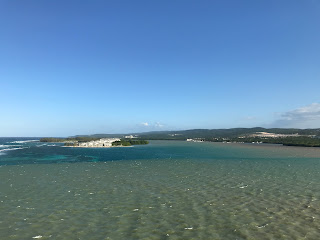
As steam and eventually diesel propulsion entered into marine engineering, the level of noise pollution increased (Erbe, Marley, Schoeman, Smith, Trigg, and Embling, 2019). As the population has expanded and the global economy spread and boomed, so too has commercial shipping expanded to keep pace with growing demand (“Global Freight,” 2019). Underwater noise pollution from shipping can cause organ and other physical damage to marine life, as well as alter animal behavior (Erbe, 2012). Some animals, especially whales and dolphins, are prone to being stranded due either to injuries or fear-based responses to noise (“Underwater noise: Causes,” n.d.; “Underwater noise: Consequences,” n.d.). Furthermore, noise may disrupt feeding and mating and cause marine animals to abandon habitats (“Underwater noise: Causes,” n.d.; “Underwater noise: Consequences,” n.d.).
Although some regulation does exist, there is actually very little effective regulation. In recent times, efforts to establish international cooperation to solve the problem of anthropogenic noise in the oceans have increased dramatically (“Resolution Adopted,” 2018; “Report from the Committee,” 2018). However, it seems very little progress in that regard has been made. Thus far the majority of progress has come from technical innovations in the maritime industry itself. Such efforts should continue and may indeed be the driving force behind ongoing positive change in the industry. Such efforts can be bolstered by effective regulations. However, legislation and regulations are complicated by the transnational, cross-border nature of the maritime industry and the international nature of the majority of oceans. Current efforts at multinational treaties to establish jointly-enforced regulations that prevent “bad behaviour” in the shipping industry should be continued with energy and a sense of purpose, backed by ongoing scientific research rather than being reactionary. That approach can help those trying to do the right thing from being thwarted by those who are determined to continue problems.
First Success Story
The cruise industry, often challenged for its environmental record, has taken steps to reduce carbon, sulfur, nitrogen, and particulate matter emissions, as well as reduce the impact of marine propulsion on marine life (“Turning Tides,” 2019). In response to bad press and growing government pressure around the world, many cruise ships are now outfitted with a propulsor known as an azipod, which is entirely electric and more efficient (“Azipod Electric Propulsion,” n.d.). Also, it is quieter, with fewer disturbances to marine life (“Potential Treatments,” 2012).
III. Degradation of Coral Reefs
At the present, coral reefs are suffering around the world. This is a significant problem especially because they support approximately 25% of all marine life in one way or another and provide valuable “coastal defence” by serving as buffers against wave action and protecting coastal wetland areas (“Importance of Coral Reefs,” 2020; “Coral Reefs Support,” n.d.).
Despite the importance of coral reefs to humans, human agency is nevertheless playing an active role in the global destruction of the reefs. Even something as simple as sunscreen, overall a valuable product to protect people from the sun, is believed to contribute to the destruction of coral reefs when it enters nearby sea water since some of the chemicals commonly found in traditional sunscreens can cause viral infections that result in coral bleaching (Danovaro, Bongiorni, Corinaldesi, Giovannelli, Damiani,…, and Pusceddu, 2008). Bleaching occurs ultimately as a response of the coral to environmental stress. When stressed, the coral loses a photosynthetic algae known as zooxanthellae, which are essential to survival and are responsible for the colour arrays of healthy coral (Bhagooli and Hidaka, 2004). Sunscreens need not even enter the water where the coral reefs are located, but merely need to be introduced into any water body that drains untreated into the oceans (Zachos and Rosen, 2019). Some areas, such as Australia and Mexico, have banned all sunscreen except “reef safe” sunscreen, which uses chemicals such as zinc oxide (McMahon, 2019).
It is not all due to humans, however. Changing ocean temperatures (though humans have a role in some of that) cause stress, which can lead to bleaching (Hoegh-Guldberg and Fine, 2004). Conflict with seaweed also is contributing to the bleaching problem (Zielinski, 2011).
Humans do also contribute to the problems facing coral by introducing pollution into the marine environment, as well as by certain questionable fishing practices, such as using explosives, which damages the coral (Actman, 2016). Even fishing practices that might seem common and harmless may be harmful to coral. One example is bottom trawling, in which nets with rollers dragged along the seafloor, even over coral, creating damage (Stiles, Stockbridge, Lande, and Hirshfield, 2010).
Many of the problems facing coral can effectively be solved with more stringent regulation. Regulation already exists that prohibits toxic dumping in oceans (Tornero and Hanke, 2016). More such legislation is needed on a global basis, given the interconnected nature of the oceans. Additionally, fishing practices can and are regulated. In the US, bottom trawling has been severely restricted (Fimrite, 2019). Of course, the problem is vast, and enforcement of both toxic dumping in the oceans and fishing naturally becomes logistically difficult. One way to help solve the enforcement problem is to commission parties within the fishing and maritime industry to help self-police, following a successful practice in Cuba that has helped preserve the reefs.
Second Success Story
The Parque Nacional Jardines de la Reina in Cuba has realised a great success in protecting their coral reefs. In fact, while coral reefs in the Caribbean overall have been suffering immensely, effective efforts by Cuba have created an environment that has resulted in reefs that are better protected and preserved than most in the Caribbean (Lippsett, 2017; Rader, 2012). One reason for this success is a high degree of tourism regulation, with tourism also generating revenue used for ecological management (Burke, 2014; Stearns, 2020; Puritz, 2017). The park also has a team of experts that the guide ecosystem management policies, as well as partnerships with NGOs and scientific organisations around the world (Whittle, 2011; Burke, 2014).
In order to deal with the problem faced by the park, i.e., enforcement, management derived a clever solution. They outsourced some of their enforcement to a private company that is also the diving service provider for tourists, with enforcement duties being a condition of the company’s monopoly rights (Burke, 2014).
Depletion of Fish Stocks
The rising amount of depletion of fish stocks around the world is an ecological problem, as well as an economic and humanitarian problem. Approximately 90% of fisheries are nearly depleted (Kituyi and Thomson, 2018). Given that fish is a major element of worldwide food supply, the depletion of the fish stocks has the potential to contribute to a major increase in global hunger and starvation.
One major cause of fish stock depletion is government subsidies for the fishing industry, most of which benefit large fleets rather than the small fishing operations, which employ approximately 90% of all fishermen (Kituyi and Thomson, 2018). This naturally impacts the livelihood of people employed in the commercial fishing sector (Kituyi and Thomson, 2018).
Other contributing factors to overfishing are intentional acts that are part of a tragedy of the commons. One egregious example Cape Cod was known as the Codfather. Although eventually stopped by the government, his fleet employed mafia-like tactics and overfished so much that the biomass may or may not recover (Farzi, 2019).
As these examples demonstrate, strong regulation is needed to help stop overfishing and give the biomass a chance to regenerate so that the ocean ecosystem is not disrupted, unnecessary contributions to global hunger may be avoided, and future generations in the commercial fishing sector may continue their profession. One legislative measure that could be employed is to end the present system of fishing subsidies, which could instead be diverted into sustainable ocean ecosystem management projects (Kituyi and Thomson, 2018). As with many regulations pertaining to the ocean, enforcement again becomes problematic. This is particularly true since some of fish may migrate, and overfishing in the waters of one nation may impact the situation faced by another nation. Additionally, the fact that most of the ocean is international compounds the issue. Therefore, regulatory measures are only as good for this problem as international treaties allow. Additional international cooperation must be sought. However, the potential near-term impact to the bottom line of fishermen must not be neglected in such discussions, since the industry support will make regulatory measures much more effective.
Coastal Erosion
As with the problem facing fisheries, coastal erosion is both an environmental problem and an economic problem. In the United States, for example, coastal erosion causes approximately $500 million each year in property damage (“Coastal Erosion,” 2019). Ecologically, coastal erosion also interferes with wetland environments, threatening the plants and wildlife in those areas (“Coastal Erosion,” 2019). Much of coastal erosion increases are caused by human agency. However, solutions have a potential for side effects, as solving coastal erosion in one location could lead to erosion and another coastal area (Labuz, 2015).
Though there is a definite need for strong regulation to curb coastal erosion due to human interference, care must be taken in the creation and enforcement of such regulations to avoid creating additional problems. Government regulation to help solve coastal erosion should be focused both on reducing the erosion in the first place and on mandating mitigation efforts such as land reclamation programmes.
Ocean Discharge
Discharge of waste into the ocean is an obvious problem. One of the classic examples is the soda can “sixpack” rings in which fish can become trapped (“This Brewery,” 2019). And, of course, toxic materials find their way, accidentally or intentionally, into the oceans (Tornero and Hanke, 2016). The problem is straightforward, yet it is ongoing and becoming worse.
The straightforward nature of the problem of ocean discharge, as well as the increase in its magnitude underscore the significant need for regulation and enforcement. Without regulation and careful enforcement, businesses are effectively free to dump whatever they wish directly into the ocean or into a body of water that flows into the ocean. Yet, it is not only a corporate problem. The trash discarded by private citizens directly into the ocean, into bodies of water that flow into the ocean, or even into storm drains that drain in some way eventually to the ocean is a major contributing factor (“Stormwater Runoff,” 2020). Therefore, regulation on such discharge is clearly something that is important to maintain and expand for the protection of the ocean. Public campaigns for awareness and active participation should accompany regulatory measures.
Conclusions
Interference with marine life by ships, degradation of coral reefs, depletion of fish stocks in certain areas due to overfishing, coastal erosion, and discharge other refuse into the oceans are five major threats to the ecosystem of the ocean, with additional second-order threats to humanity and the economy. Humanity depends upon the oceans for food and transportation, as well as for temperature regulation and oxygen. Not to protect the oceans is ultimately to point a loaded gun at ourselves. Unfortunately, as the population grows, a tragedy of the commons has resulted, coupled with selfish behaviour on the part of companies, individuals, and sometimes even governments. The scarce resources of the ocean are becoming even more scarce.
Due to the nature of the problems facing the oceans today, there is a definite need for continued and expanded strong regulation and protection programmes. There remains a problem of enforcement and implementation, given the multi-national and cross-border nature of the oceans, as well as the large international section of the oceans. Therefore, protection programmes and regulation must be accompanied by diplomatic efforts leading to treaties that indicate a shared goal of oceanic protection. Furthermore, heavy-handed measures against companies and individuals, especially where a real or perceived economic damage may happen, are counterproductive. Thus industry and public cooperation are essential, suggesting the need for a comprehensive industry and public relations effort to accompany any regulatory efforts. The problem impacts everyone, and therefore the solution should, as much as possible, involve everyone.
REFERENCES
Actman, J. (2016). Watch Fishermen Bomb Their Catch Out of the Water. National Geographic.
Attitudes About Aging: A Global Perspective. (January 30, 2014). Pew Research Center. https://www.pewresearch.org/global/2014/01/30/chapter-4-population-change-in-the-u-s-and-the-world-from-1950-to-2050/
Azipod Electric Propulsion: The driving force behind safe, efficient and sustainable operations. (n.d.) Retrieved from https://new.abb.com/marine/systems-and-solutions/azipod
Bhagooli, R. and Hidaka, M. (2004). Release of zooxanthellae with intact photosynthetic activity by the coral Galaxea fascicularis in response to high temperature stress. Marine Biology, 145.
Bernardini, M., Fredianelli, L., Fidecaro, F., Gagliardi, P., Nastasi, M., and Licitra, G. (2019). Noise Assessment of Small Vessels for Action Planning in Canal Cities. Environments, 6(31).
Burke, L. (2014). Cuba's Jardines de la Reina Reef—A Beacon of Hope in the Caribbean. World Resources Institute. Retrieved from https://www.wri.org/blog/2014/01/cubas-jardines-de-la-reina-reef-beacon-hope-caribbean
Coastal Erosion. (2019). U.S. Climate Resilience Toolkit. https://toolkit.climate.gov/topics/coastal-flood-risk/coastal-erosion
Coral reefs support 25% of life in the ocean -- but they need our help. (n.d.). National Marine Sanctuaries. https://sanctuaries.noaa.gov/news/dec15/coral-bleaching.html
Danovaro, R., Bongiorni, L., Corinaldesi, C., Giovannelli, D., Damiani, E., Astolfi, P., Greci, L., and Pusceddu. (2008). Sunscreens Cause Coral Bleaching by Promoting Viral Infections. Environmental Health Perspective, 116(4).
Erbe, C. (2012). Effects of Underwater Noise on Marine Mammals. In Popper, A.N. and Hawkins, A., Eds. The Effects of Noise on Aquatic Life. Springer.
Erbe, C., Marley, S.A., Schoeman, R.P., Smith, J.N., Trigg, L.E., and Embling, C.B. (2019). The Effects of Ship Noise on Marine Mammals — A Review. Frontiers in Marine Science.
Factsheet: People and Oceans. (2017). The Ocean Conference. United Nations.
Farzi, A.N. (August 20, 2019). The ‘Codfather’ was a seafood kingpin, until fake Russian mobsters took him down. Now he’ll never fish again. Washington Post.
Fimrite, P. (November 20, 2019). Bottom-trawling fishing severely restricted off West Coast starting in January. San Francisco Chronicle.
Global Freight Expected to Triple by 2050. (May 27, 2019). The Maritime Executive.
Harrabin, R. (3 October 2013). Health of oceans 'declining fast'. BBC News.
Hoegh-Guldberg, O. and Fine, M. (2004). Low temperatures cause coral bleaching. Coral Reefs, 23.
IMO Profile. (2020). International Maritime Organisation. United Nations. https://business.un.org/en/entities/13
Importance of Coral Reefs. (2020). NOAA Ocean Education Service. https://oceanservice.noaa.gov/education/kits/corals/coral07_importance.html
Kituyi, M. and Thomson, P. (2018). 90% of fish stocks are used up – fisheries subsidies must stop emptying the ocean. World Economic Forum.
Labuz, T.A. (2015). Environmental Impacts—Coastal Erosion and Coastline Changes. Second Assessment of Climate Change for the Baltic Sea Basin.
McMahon, S. (August 20, 2019). 6 Destinations with Sunscreen Bans, and What You Need to Know. Smarter Travel. https://www.smartertravel.com/sunscreen-ban-destinations/
Ocean-Atmosphere CO2 Exchange. (n.d.). Science On a Sphere: National Oceanic and Atmospheric Administration. https://sos.noaa.gov/datasets/ocean-atmosphere-co2-exchange/
Potential Treatments for Reducing Underwater Sound to Protect Marine Life. (7 July 2012). CSL Australia. Retrieved from https://www.epa.govt.nz/assets/FileAPI/proposal/EEZ000004/Evidence/faf4d5eacf/EEZ000004-08D-Ian-Ives-Vessel-Dynamics.PDF
Puritz, A. (2017). Evaluating management effectiveness of marine protected areas in Cuba's southern archipelagos: A comparative analysis between Punta Francés and Jardines de la Reina National Parks. Open Access Theses. Retrieved from http://scholarlyrepository.miami.edu/oa_theses/6
Rader, D. (2012). 60 Minutes and Cuban Reefs. Environmental Defense Fund. Retrieved from http://blogs.edf.org/edfish/2012/01/04/60-minutes-and-cuban-reefs/
Report from the Commission to the European Parliament and the Council assessing Member States' programmes of measures under the Marine Strategy Framework Directive. (2018). European Commission.
Resolution adopted by the General Assembly on 11 December 2018. (2018). General Assembly, United Nations.
Ship Quieting Technologies. (n.d.). Sounds in the Sea. https://dosits.org/animals/effects-of-sound/moderate-or-eliminate-the-effects-of-human-activities/ship-quieting-technologies/
Stearns, W. (February 9, 2020). Cuba’s Gardens of the Queen. Underwater Journal.
Stiles, M.L., Stockbridge, J., Lande, M., and Hirshfield, M.F. (2010). Impacts of Bottom Trawling on Fisheries, Tourism, and the Marine Environment. Oceana.
Stormwater Runoff. (2020). US EPA. https://www3.epa.gov/region9/water/npdes/stormwater-feature.html
The Ocean-Atmosphere System. (2017). https://www.tulane.edu/~sanelson/Natural_Disasters/oceanatmos.htm
This brewery is ditching plastic six-pack rings to save marine life. (October 6, 2019). The European Sting. https://europeansting.com/2019/10/06/this-brewery-is-ditching-plastic-six-pack-rings-to-save-marine-life/
Tornero, V. and Hanke, G. (2016). Chemical contaminants entering the marine environment from sea-based sources: A review with a focus on European seas. Marine Pollution Bulletin, 112(1-2).
Turning tides: sustainability and the cruise industry in 2019. (December 4, 2019). National Geographic. https://www.nationalgeographic.co.uk/travel/2019/12/turning-tides-sustainability-and-cruise-industry-2019
Underwater noise: Causes. (n.d.). Ocean Care. Retrieved from https://www.oceancare.org/en/our-work/ocean-conservation/underwater-noise/silent-oceans-causes-underwater-noise/
Underwater noise: Consequences. (n.d.). Ocean Care. Retrieved from https://www.oceancare.org/en/our-work/ocean-conservation/underwater-noise/underwater-noise-consequences/
Whittle, D. (2011). Twenty Years of Coastal Research and Conservation in Cuba. Environmental Defense Fund. Retrieved from http://blogs.edf.org/edfish/2011/12/05/twenty-years-of-coastal-research-and-conservation-in-cuba/
Zachos, E. and Rosen, E. (2019). What sunscreens are best for you—and the planet? National Geographic. https://www.nationalgeographic.com/travel/features/sunscreen-destroying-coral-reefs-alternatives-travel-spd/
Zielinski, S. (May 17, 2011). Ocean Acidification and the Battle Between Coral and Seaweed. Smithsonian Magazine.
Note: This article first appeared in Telicom, 34(1) in 2022.


